
Plants
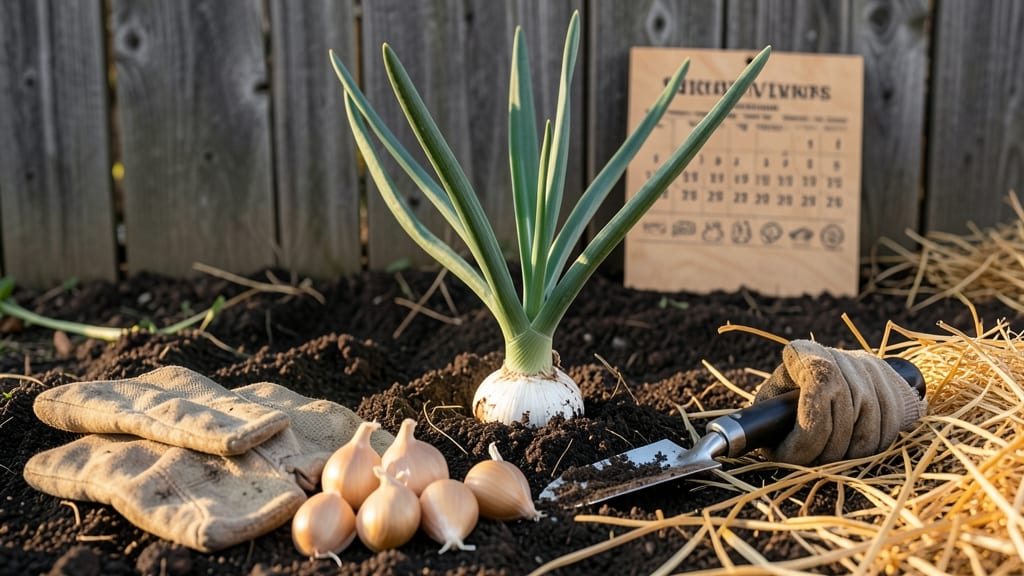
Knowing when to plant garlic in Vermont is the difference between a bumper crop of plump bulbs and wasted cloves. With Vermont’s short growing season and unpredictable frost dates, timing is everything—especially for hardneck varieties that thrive in zones 4b-6a.
Most gardeners in Vermont plant their 🧄 garlic between mid-October and early November, but getting it wrong means roots won’t establish before winter. I’ll show you exactly how to align your planting with Vermont’s frost-free window and avoid the mistakes that leave gardeners empty-handed come harvest.
Whether you’re a first-time grower or a seasoned Vermonter, this guide breaks down the ideal planting schedule, soil prep tips, and variety choices that perform best in our climate. No more guesswork—just a foolproof plan for garlic that’s ready to harvest by late June.
Let’s dive into the critical window that turns your fall planting into a summer harvest. You’ll learn how to time it perfectly, even if you’ve struggled before.
Vermont’s ideal garlic planting dates by frost Zone (hardneck varieties only)
Vermont’s USDA Zones 3–5 create unique challenges for garlic growers. Unlike milder climates, hardneck varieties thrive here because they need cold winters to form bulbs. Planting too late risks frozen cloves, while planting too early lets roots grow before dormancy—both kill your harvest.
For Zone 3–4 (northern Vermont), aim for mid-October to early November—when soil temps hit 40–50°F. In Zone 5 (southern Vermont), you’ve got a slightly longer window: late September to mid-October. The key? 4–6 weeks before ground freeze, not air freeze.
Here’s why timing matters: Garlic needs 60–80 days of cold (40°F or below) to form bulbs. Plant too early, and roots grow before winter; too late, and cloves rot in frozen soil. Vermont’s first hard frost (mid-October) signals the start of your window.
| Zone | Ideal Planting Window | Soil Temp Threshold | Notes |
|---|---|---|---|
| 3–4 (Northern VT) | Mid-October to early November | 40–50°F | Use ‘Music’ or ‘German White’; mulch heavily. |
| 5 (Southern VT) | Late September to mid-October | 45–55°F | ‘Chesnok Red’ or ‘Silverskin’ work well. |
| Microclimates (e.g., Champlain Valley) | Early October | 50–60°F | Plant 2 weeks earlier than Zone 4. |
Microclimates like Vermont’s Champlain Valley (warmer) or Green Mountains (colder) shift your window by 1–2 weeks. Use a soil thermometer—plant when temps hit 40°F at 4" depth. Pro tip: Hardneck garlic (like ‘Music’) handles Vermont’s winters better than softneck.
Never plant spring garlic in Vermont—it won’t bulb properly. Instead, focus on fall-planted hardnecks, which store well and adapt to Zone 3–5 winters. For extra protection, add 6–8 inches of straw mulch after planting.
Vermont’s last frost (mid-November) isn’t your deadline—it’s the first frost (mid-October) that sets your schedule. Miss it, and your cloves won’t root before winter. But don’t panic if snow falls early: garlic overwinters fine under mulch.
Test your soil’s pH (6.0–7.0) before planting. Vermont’s heavy clay soils drain poorly—amend with compost or sand to prevent rot. Plant cloves 2 inches deep, 4 inches apart, with the pointy end up.
Harvest in late June to early July when lower leaves brown but upper leaves stay green. Vermont’s short season means no second harvests—plan for one big crop. Store cured bulbs in a cool, dry place (50–60°F, 60% humidity) for up to 6 months.
For organic growers, use fish emulsion in June to boost bulbs. Avoid synthetic fertilizers—they burn garlic roots. And remember: Patience pays off—Vermont garlic takes 240–300 days to mature, but the flavor is worth it.
Vermont’s ideal garlic planting dates by frost Zone (hardneck varieties only)
Vermont’s USDA Zones 3-5 create unique challenges for garlic growers, but hardneck varieties thrive with the right timing. The key is planting 4-6 weeks before the first hard frost, which typically falls between mid-October and early November across the state. This window ensures cloves establish roots before winter dormancy.
For Zone 3 (northern Vermont), aim for late September to mid-October—earlier than southern regions due to colder soils. In Zones 4-5 (Champlain Valley, Burlington), mid-October to early November works best. Microclimates matter: valleys freeze later than mountain slopes, so adjust by 1-2 weeks if needed.
Soil temperature is critical—garlic cloves need 40-50°F soil to sprout. Use a soil thermometer to confirm readiness. In Vermont, this usually aligns with air temperatures dropping below 50°F consistently.
🌱 Vermont Garlic Planting Timeline
| Zone | Ideal Planting Window | Soil Temp Threshold | Key Varieties |
|---|---|---|---|
| Zone 3 (St. Johnsbury) | Late Sept–Mid-Oct | 40–45°F | Music, German White |
| Zone 4 (Burlington) | Mid-Oct–Early Nov | 45–50°F | Chesnok Red, Silverskin |
| Zone 5 (Bennington) | Early–Mid-Oct | 50°F+ | German Red, Purple Stripe |
*Adjust 1–2 weeks for microclimates (e.g., valleys vs. mountains).
Spring planting is not recommended in Vermont—hardneck garlic needs winter dormancy to develop large bulbs. If you miss the fall window, wait until next autumn; spring-planted garlic rarely matures properly in our climate.
Pro tip: Mark your calendar for Vermont’s average first frost date (check The Old Farmer’s Almanac) and count backward 6 weeks. For example, if frost hits November 15, plant by October 1.
After planting, apply 4–6 inches of mulch (straw or leaves) to insulate cloves through winter. This protects them from freeze-thaw cycles and early snowmelt—common issues in Vermont’s unpredictable winters. 🌿