
Plants
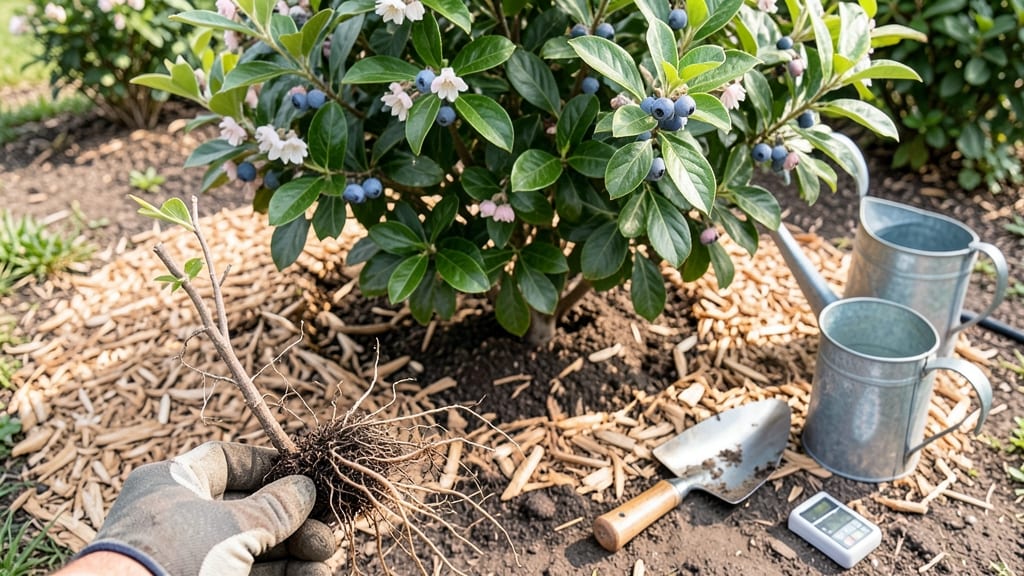
Planting your 🫐 blueberries at the right time in Maryland is the secret to avoiding stunted bushes and tiny berries—because those 6b-7a winters and humid summers demand precision.
Skip the wrong window, and you might end up with plants struggling to establish roots before the heat hits or frost nips new growth.
Most gardeners in Maryland swear by fall planting (September-October) as the golden window, but early spring (February-April) works too—if you act fast before last frost hits around mid-April.
The key? Choosing the right variety (Southern Highbush, Rabbiteye, or Northern hybrids) and preparing acidic soil (pH 4.5-5.5) to mimic their natural bog habitats.
I’ll break down exactly when to dig in for your specific Maryland region—whether you’re in Baltimore’s urban heat islands or the cooler Eastern Shore—and how to adjust for bare-root vs. container-grown plants.
Plus, I’ll share the 3 critical care steps after planting to ensure your bushes thrive when harvest season rolls around in June-July.
Ready to turn your backyard into a blueberry bonanza? Let’s get those shrubs in the ground at the perfect moment so you’re feasting on plump, juicy berries instead of watching them fight for survival.
Best planting times for blueberries in Maryland by variety type
Maryland’s USDA Zones 6b-7a offer two prime windows for planting blueberries: early spring (March-April) and fall (September-October). Each variety thrives best during specific frost-free periods, so choosing the right time maximizes root establishment and fruit production.
Southern Highbush varieties, like ‘Peach Sorbet’, adapt well to Maryland’s climate, while Northern Highbush hybrids, such as ‘Bluecrop’, need cooler conditions to set fruit properly.
Spring planting (March-April) aligns with soil warming, allowing roots to establish before summer heat. Fall planting (September-October) gives plants time to root before winter dormancy. Both methods work, but fall planting often yields stronger first-year growth in Maryland’s mild winters.
For container-grown blueberries, you can plant slightly later in spring (April-May) since they’re already established.
Key timing factors include avoiding late frosts (typically after mid-April) and ensuring soil temperatures stay above 40°F (4°C) for root growth. Maryland’s humidity and heat spells can stress young plants, so timing matters more than in drier climates. Let’s break down the best planting windows by variety to help you plan your Maryland blueberry garden for a bountiful harvest.
| Variety Type | Best Planting Window | Soil Prep Needed | Harvest Time | Maryland Notes |
|---|---|---|---|---|
| Southern Highbush (e.g., ‘Peach Sorbet’) | Spring (March-April) or Fall (September) | pH 4.5-5.5, acidic compost | June-July | Heat-tolerant; ideal for Baltimore/Western MD |
| Northern Highbush (e.g., ‘Bluecrop’) | Fall (September-October) preferred | pH 4.5-5.5, organic matter | Late June-July | Best for Eastern Shore/cooler microclimates |
| Rabbiteye (e.g., ‘Climax’) | Spring (April-May) | Well-draining, acidic soil | July-August | Less common but thrives in Western MD heat |
| Dwarf Varieties (e.g., ‘Top Hat’) | Spring (March-April) or Fall (October) | Container-friendly, acidic mix | June-July | Perfect for containers in urban MD gardens |
For Southern Highbush varieties, like ‘Peach Sorbet’, spring planting in March-April is ideal because these varieties handle Maryland’s summer heat better than Northern types. They also produce fruit earlier in the season, giving you berries by June.
If you choose fall planting, aim for September to allow roots to establish before winter. These varieties are perfect for Baltimore and Western Maryland, where summers can be intense.
Northern Highbush hybrids, such as ‘Bluecrop’, prefer fall planting (September-October) because they need a period of winter chilling to set fruit properly. Planting in fall gives them time to root deeply before Maryland’s first frost (mid-November).
This variety thrives in cooler microclimates, like the Eastern Shore, where nights are chilly even in summer. If you plant in spring, do so by early April to avoid heat stress.
Rabbiteye varieties, like ‘Climax’, are less common in Maryland but can succeed in Western Maryland’s hotter zones. They need spring planting (April-May) because their roots are sensitive to cold.
These varieties produce large berries but require well-draining, acidic soil to prevent root rot—a common issue in Maryland’s clay-heavy soils. If you’re growing Rabbiteye, amend your soil with pine bark fines or peat moss to improve drainage.
Dwarf varieties, such as ‘Top Hat’, are excellent for containers or small gardens and can be planted in either spring (March-April) or fall (October). Their compact size makes them ideal for urban Maryland gardens, where space is limited.
Use a large container (at least 18 inches deep) with acidic potting mix to mimic their natural growing conditions. These varieties fruit reliably in June-July, just like their larger counterparts.
No matter which variety you choose, soil preparation is critical. Maryland’s native soil is often alkaline and clay-heavy, which blueberries hate. Before planting, amend your soil with sulfur or peat moss to
Critical factors that determine your exact planting window in Maryland
Maryland’s USDA Zones 6b-7a create a tricky balance—too early, and frost zaps tender roots; too late, and summer heat stresses young plants. Your exact planting window depends on 3 key factors: last frost dates, soil temperature, and your local microclimate (urban vs. rural).
Let’s break down how to pinpoint the perfect moment for your county.
First, last frost dates vary wildly across Maryland. Baltimore’s urban heat islands often see frost-free by March 20-25, while the Eastern Shore can linger until April 10-15. Check your local almanac—planting bare-root blueberries 2-3 weeks after your area’s last frost minimizes transplant shock.
For container-grown plants, you can push it 1 week earlier since roots are established.
Next, soil temperature must be above 45°F (7°C) for 10+ hours daily. Use a soil thermometer—cool Maryland springs mean waiting until late April in northern counties. Fall planting? Aim for 60°F (15°C) soil temps by September 15th to ensure root growth before winter dormancy.
| Factor | Maryland-Specific Rule | Actionable Tip |
|---|---|---|
| Last Frost Date | Baltimore: Mar 20-25 | Eastern Shore: Apr 10-15 | Plant bare-root 2-3 weeks post-frost; containers 1 week earlier |
| Soil Temperature | Spring: >45°F (7°C) | Fall: >60°F (15°C) | Use soil thermometer; wait for consistent temps |
| Microclimate | Urban: Warmer by 2-3°F | Rural: Cooler nights | Urban? Plant 1 week earlier; rural? Wait 1 week longer |
| Plant Type | Bare-root vs. Container-grown | Containers tolerate earlier planting; bare-root needs warmer soil |
Don’t overlook microclimates—your backyard might be 2-3°F warmer than the county average. Urban areas like Baltimore City experience "heat islands" that melt frost earlier, while Western Maryland’s Appalachian foothills stay cooler.
For example, if your garden sits in a south-facing slope, plant 1 week earlier than the general guideline. Conversely, low-lying areas with cold air pockets? Wait an extra week.
Pro tip: Container-grown blueberries give you flexibility—plant them 2 weeks earlier than bare-root varieties since their roots are already established. Just ensure the root ball stays moist until roots spread into your soil. For bare-root plants, soak roots in water for 2 hours before planting to reduce transplant shock.
Finally, avoid planting during Maryland’s humidity spikes (late May-June) when fungal diseases like botrytis thrive. If you miss fall planting, wait until early September to give plants time to harden off before winter. The goal? 6-8 weeks of root establishment before dormancy or summer heat arrives.
🌱