
Plants
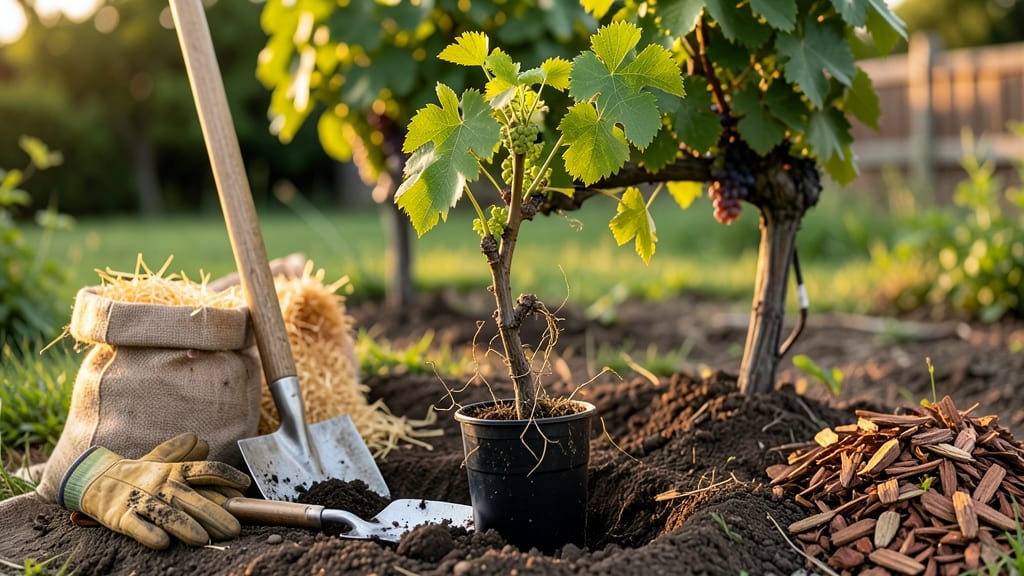
Timing your 🍇 grapes planting in Georgia wrong could mean frost damage or stunted growth—but get it right, and you’re set up for a bountiful harvest.
The late winter to early spring window (February to March) is your golden opportunity, when soil warms enough to root new vines while avoiding Georgia’s unpredictable frost risks.
Why does this matter? Because Georgia’s 7b-8b climate zones create microclimates where a week can mean the difference between thriving vines and lost investments. Muscadines need 300+ chill hours, while warm-climate varieties barely tolerate 200 hours—and planting outside those needs spells trouble.
I’ll break down exactly when to plant based on your region—whether you’re in the Piedmont’s rolling hills or the Coastal Plain’s sandy soils—plus how to prep soil and choose varieties that thrive in Georgia’s heat. No more guessing games, just proven strategies for stronger roots and bigger yields.
Ready to turn your backyard into a grapevine oasis? Let’s dive into the perfect planting schedule tailored for Georgia’s unique growing conditions.
Best planting months for Georgia grapes by chill-hour needs
Georgia’s diverse climate zones mean your grape planting window depends on chill-hour requirements and last-frost dates. Most regions fall under USDA Zones 7b-8b, but North Georgia’s higher elevations (like Blue Ridge) can drop into Zone 6a, while coastal areas like Savannah stay in Zone 8a.
This creates a 30-day variance in ideal planting times across the state.
For muscadine grapes (300+ chill hours), aim for late February to mid-March in North Georgia. These native varieties thrive in cooler climates and need time to establish roots before summer’s heat.
In South Georgia, where chill hours drop below 200-300, warm-climate varieties like ‘Scuppernong’ can be planted as late as early April—just before the last frost risk fades.
French hybrid grapes (200-400 chill hours, like ‘Norton’) offer flexibility: plant them in February-March in North Georgia or March-April in South Georgia. These disease-resistant varieties are perfect for home winemakers and table grapes.
Always check your local frost maps—the University of Georgia Extension provides updated data for your county.
Pro Tip: Bare-root vines should be planted 4-6 weeks before bud break (when you see green tips on branches). Container-grown grapes can handle late planting (up to May), but they’ll need extra watering to compensate for slower root establishment.
| Variety Type | Chill Hours Needed | Best Planting Window (North GA) | Best Planting Window (South GA) | Key Notes |
|---|---|---|---|---|
| Muscadines | 300+ | Late Feb–Mid-Mar | Early–Mid-Mar | Native; drought-tolerant; thick skin |
| French Hybrids | 200–400 | Feb–Early Mar | Mar–Early Apr | ‘Norton’; high yield; disease-resistant |
| Warm-Climate (Vinifera) | Under 200 | Mid–Late Mar | Late Mar–Apr | ‘Scuppernong’; needs winter protection |
Missed the ideal window? Don’t panic. Container-grown grapes can be planted up to May, but prioritize soil moisture and shade cloth for young vines.
The trade-off? Slower root growth may delay first harvest by 1-2 years. For bare-root vines, planting after mid-April risks heat stress before roots establish.
Always test your soil pH (aim for 6.0-6.5) and amend with compost or peat moss if needed. Clay-heavy soils in North Georgia benefit from gypsum, while sandy soils in South Georgia need organic matter to retain moisture.
A well-drained site is non-negotiable—root rot is a silent killer for grapes.
For North Georgia gardeners, monitor mountain frost pockets—temperatures can drop 10°F colder than valley areas. Use frost cloth or row covers if planting early. In South Georgia, humidity and fungal diseases (like black rot) are bigger threats than frost.
Choose resistant varieties and space vines 6-8 feet apart for airflow.
Remember: Grapes are perennial, so first-year yield is minimal. Focus on root establishment and vine training to set up for 3-5 years of abundant harvests. With the right planting timing and variety selection, your Georgia grapevine could be producing homegrown wine or jam by next fall.
🍇
How to adjust planting for Georgia’s microclimates: north vs. south
Georgia’s diverse geography means your grapevine’s success hinges on where you plant. North Georgia’s higher elevations (like the Blue Ridge Mountains) experience cooler temps and longer frost seasons, while South Georgia’s coastal plains (near Savannah) bake under earlier springs.
These differences can shift your planting window by 3-4 weeks—so let’s break it down by region.
In North Georgia (USDA Zones 6b-7a), where last frost dates often linger until mid-April, aim to plant bare-root grapes in late March. The soil stays cooler longer, so young roots need extra time to establish before summer’s heat.
Meanwhile, South Georgia (Zones 7b-8b) gardeners can start as early as mid-February, thanks to warmer soils and fewer frost risks.
Planting in low-lying frost pockets—even in South Georgia—can kill young vines. Avoid valleys or depressions where cold air settles. Always check microclimate frost maps from your local Cooperative Extension Service for precise risks.
Soil prep also varies wildly. North Georgia’s clay-heavy soils (common in the Piedmont) need amendments like compost or sand to improve drainage, while South Georgia’s sandy soils benefit from orgainc mulch or peat moss to retain moisture.
Test your soil’s pH—grapes thrive in 6.0-6.5, and Georgia’s native soils often skew acidic or alkaline.
Young vines in hotter South Georgia zones (like the Coastal Plain) need afternoon shade during their first growing season. Use lightweight shade cloth (30-50%) or plant near temporary structures until roots establish. In contrast, North Georgia vines can handle full sun earlier, thanks to cooler summers.
Irrigation needs differ too. South Georgia’s intense summer heat demands deep watering 2-3x weekly until vines are established, while North Georgia’s humid summers may require only weekly deep soaks.
Always water at the base of the vine to prevent fungal diseases like powdery mildew, which thrives in Georgia’s humidity.
Pro tip: Mulch heavily (4-6 inches of straw or wood chips) in both regions to regulate soil temperature and retain moisture. In North Georgia, mulch also protects roots from winter freeze-thaw cycles, while in South Georgia, it shields vines from scorching summer sun.
Adjust your planting timeline by 1-2 weeks if your microclimate runs hotter or colder than average for your zone.