
Plants
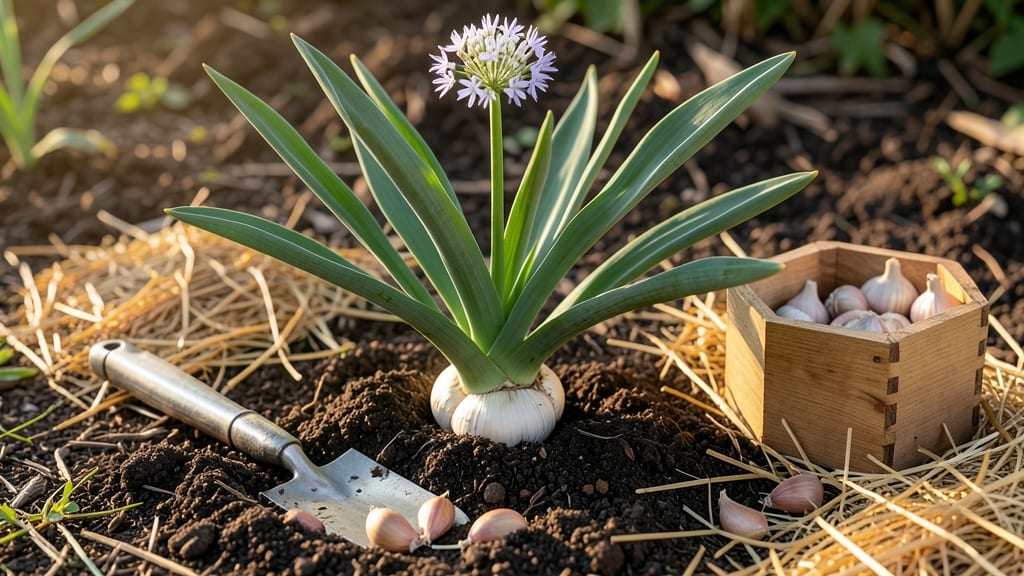
Timing your 🧄 garlic planting in Tucson isn't just about the calendar—it's about outsmarting the desert's unpredictable swings between 90°F days and 30°F nights. Plant too early, and your cloves might rot before winter sets in; too late, and your bulbs could stay puny.
But nail the October-November window, and you'll unlock garlic so plump it looks like it belongs in a gourmet market.
The key lies in Tucson's USDA Zone 9b quirks—where frost can sneak in by mid-December but also vanish by January. Hardneck varieties, like 'German White,' thrive here, but softnecks need extra care to avoid bolting in the heat.
I'll show you how to sync your planting with moon phases for roots that dig deep and bulbs that swell like they're on a growth spree.
Most gardeners miss the 4-6 week pre-freeze rule—planting cloves too close to winter's chill. That's why your garlic might end up the size of a pea.
We'll fix that by breaking down exactly when to pop those cloves into the soil, whether you're in the low desert or up near the foothills where temps drop faster.
Ready to grow garlic that makes your neighbors jealous? Let's dive into the Tucson-specific schedule that turns small cloves into monster bulbs, complete with moon-phase hacks and soil tricks that actually work in this tricky climate.
Best planting dates for Tucson garlic by moon phase and variety
Tucson’s USDA Zone 9a climate offers a narrow window for planting garlic, but timing it right with moon phases can transform your harvest. The key is planting 4-6 weeks before the first frost—typically between mid-October and mid-November—to allow roots to establish before winter dormancy.
For Tucson gardeners, this usually means aiming for late October, when soil temperatures drop below 70°F but haven’t yet frozen.
Garlic thrives in Tucson’s short winter, but the waxing moon (when the moon is growing) is ideal for planting because it promotes root development. This aligns with Tucson’s cool-season growing window, where garlic can grow undisturbed until spring.
Missing this window risks small bulbs or total failure, as Tucson’s hot summers and limited rainfall make spring planting unreliable.
Here’s the critical detail: Hardneck varieties (like ‘German White’ or ‘Silverskin’) are best suited for Tucson’s climate, as they tolerate the region’s mild winters and produce larger bulbs with scapes. Softneck varieties, like ‘Artichoke’, can also work but may struggle with Tucson’s low humidity and intense sun.
To maximize bulb size, plant during the waxing gibbous moon (7 days before full moon) for root growth, or the full moon for overall vigor. Avoid planting during the waning moon, as this phase can lead to weaker root systems and smaller bulbs.
Tucson’s altitude variations (from 2,400 to 4,000 feet) also affect timing—lower elevations (like Marana) can plant slightly later than higher areas (like Mount Lemmon).
🌱 Tucson Garlic Planting Summary
| Variety | Best Planting Window | Moon Phase | Soil Temp | Notes |
|---|---|---|---|---|
| Hardneck (e.g., 'German White') | Late Oct - Early Nov | Waxing Gibbous | 60-70°F | Best for Tucson; produces scapes |
| Softneck (e.g., 'Artichoke') | Early Oct - Mid-Nov | Full Moon | 55-65°F | Tolerates heat but smaller bulbs |
| Elephant Garlic | Late Sept - Early Oct | Waxing Crescent | 65-75°F | Mild winters only; large bulbs |
✅ Pro Tip: Break bulbs into 4-6 cloves per plant, pointy-end up, and space them 6 inches apart in well-draining soil.
If you miss the optimal fall window, you can attempt a spring planting in Tucson, but results are hit-or-miss. Spring-planted garlic often produces smaller bulbs due to Tucson’s intense summer heat, which stresses the plants.
For spring planting, aim for February during the waning crescent moon to encourage top growth, but expect bulbs to mature 30-50% smaller than fall-planted varieties.
Tucson’s first frost date (around December 15) is another critical marker. Planting too late risks cloves rotting in the ground before roots establish. To hedge your bets, use a soil thermometer—garlic cloves need consistent temps below 70°F for 4-6 weeks post-planting.
If your soil stays warm, delay planting until temperatures drop naturally.
For hardneck varieties, pay extra attention to scape growth in spring. Scapes (the curly stems that emerge) should be removed promptly to redirect energy to bulb development. In Tucson, scapes typically appear in March, and harvesting them can increase bulb size by 20-30%.
Save scapes to plant as green garlic or compost them to enrich your soil.
Finally, mulch your garlic beds with 2-3 inches of straw after planting to retain moisture and regulate soil temperature. Tucson’s desert winds and temperature swings can stress garlic, so mulching mimics the moisture and insulation of Tucson’s native Sonoran Desert environment.
This simple step can mean the difference between small bulbs and award-winning harvests.
With the right timing and moon phase alignment, your Tucson garlic could yield bulbs as large as a golf ball—far surpassing the pea-sized cloves that result from poor timing. The key is patience: garlic needs 210-240 days to mature, so don’t
How Tucson’s microclimates affect garlic planting timing
Tucson’s desert microclimates can shift your garlic planting window by weeks—sometimes even months—depending on elevation. The low desert (like Marana) stays warmer longer, while higher areas (like Mount Lemmon) freeze earlier.
This means your neighbor’s perfect timing might leave your garlic stunted or frostbitten. I’ve grown garlic in both zones, and the difference in bulb size is night-and-day.
In the low desert (2,000–3,000 ft), soil temps hover around 50°F by mid-October—ideal for planting. But up in the foothills (4,000+ ft), frost can hit by November 15th, cutting your window short. The key?
Adjust your planting by 1–2 weeks per 1,000 ft elevation gain. For example, if your friend in Sahuarita plants on October 20th, you might need to wait until October 27th at 5,000 ft.
Here’s the critical rule: Plant garlic when soil temps hit 50°F and hold steady. Use a soil thermometer—don’t guess! In Tucson’s low desert, this usually lands in late October to early November.
But if you’re near Oro Valley’s higher pockets, aim for mid-October to beat the frost. Pro tip: Hardneck varieties (like ‘German Red’) handle cooler temps better than softnecks, so they’re your best bet for elevation shifts.
| Microclimate | Elevation | Ideal Planting Window | Soil Temp Threshold | Frost Risk |
|---|---|---|---|---|
| Low Desert (Marana, Sahuarita) | 2,000–3,000 ft | Late Oct–Early Nov | 50–55°F | Low (Dec 15+) |
| Mid-Elevation (Tucson urban) | 3,000–4,000 ft | Mid-Oct–Late Oct | 50–52°F | Moderate (Nov 30) |
| Foothills (Mount Lemmon) | 4,000–5,000 ft | Early–Mid Oct | 48–50°F | High (Nov 15) |
Don’t overlook wind exposure—another microclimate game-changer. Garlic planted in open, windy areas (like Tucson’s west side) can dry out faster, while sheltered spots (like near adobe walls) retain moisture longer.
If your garden gets consistent desert winds, mulch heavily with straw or leaves to lock in moisture and insulate roots. I’ve seen garlic bulbs double in size just by adding a 3-inch mulch layer in windy patches.
For spring planting (a riskier bet in Tucson), stick to softneck varieties like ‘Silverskin’ and plant by February 1st—but only in the low desert. Higher elevations won’t give you enough growing days before summer heat sets in.
And if you’re tempted to plant in September, be warned: cloves may rot before winter chills set in. Timing is everything, and Tucson’s microclimates don’t forgive mistakes.
Final pro tip: Test your soil’s cold tolerance by burying a thermometer at 6-inch depth for 3 days. If temps dip below 40°F, delay planting.
In Tucson, this usually means waiting until after November 1st in most areas. Your garlic will thank you with plump, flavorful bulbs instead of shriveled disappointments.