
Plants
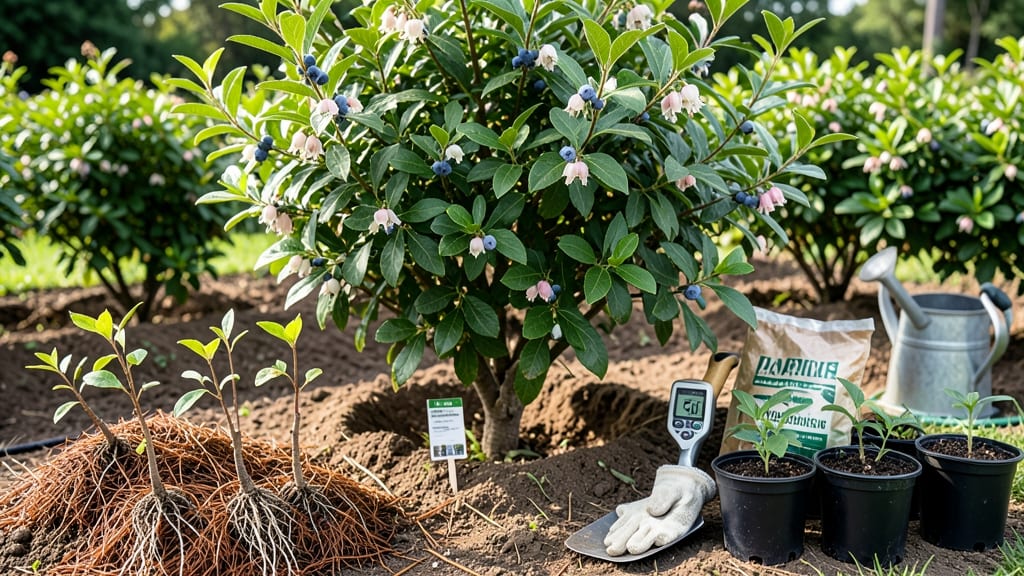
Timing your blueberry planting in Massachusetts isn't just about the calendar—it's about matching your variety's chill-hour needs with the 5b-6b climate. Plant too early, and frost will nip those delicate roots; too late, and your bushes might never fully establish before winter.
The key lies in understanding whether you're planting bare-root bushes in fall or container-grown plants in spring, and how your local microclimate plays into the equation.
For most Massachusetts gardeners, the sweet spot is late April through early June for spring planting or September through October for fall. But here's the catch: coastal areas with milder winters might handle late fall plantings better than inland zones where early frosts arrive sooner.
I'll break down exactly how to time it right for your specific conditions, so you're not left guessing whether your 🫐 bushes will thrive or struggle.
What you'll discover is that blueberries aren't one-size-fits-all plants. Some varieties need 800+ chill hours to set fruit, while others do just fine with half that. We'll cover the best cultivars for your zone and how to prepare your soil so your bushes get off to a strong start.
Trust me, getting this right means the difference between a 5-pound harvest and a 50-pound bounty by next summer.
Whether you're a first-time blueberry grower or looking to expand your garden, I've got the insider tips that'll save you from common mistakes.
From soil pH tricks to frost protection hacks, you'll learn how to give your bushes the best possible start—so you can enjoy fresh, homegrown blueberries for years to come. Let's get those plants in the ground the right way.
Best planting times for blueberries in Massachusetts (Zone 5-6)
Massachusetts gardeners have two prime windows to plant blueberries: early spring (after the last frost) and early fall (before the first frost). The ideal months are September and October, when soil temperatures cool but remain workable.
This timing allows roots to establish before winter dormancy while avoiding summer heat stress.
For bare-root plants, fall planting is preferred because cooler temperatures reduce transplant shock. If you opt for container-grown blueberries, early spring (late April to early May) works well, as the soil warms and frost risk diminishes. Both methods require careful attention to soil pH (4.5–5.5) and moisture levels.
🌱
| Planting Window | Best Months | Soil Temp | Key Considerations |
|---|---|---|---|
| Early Spring | Late April–Early June | 45–55°F | After last frost; water deeply to establish roots |
| Early Fall | September–October | 50–60°F | Before first frost; mulch heavily for winter protection |
| Avoid Planting | July–August | N/A | High heat stress; poor root establishment |
In Massachusetts’ Zone 5-6 climate, late spring plantings (May–June) carry frost risk, especially in inland areas like Worcester or Springfield. Coastal regions (e.g., Cape Cod) enjoy milder springs, making early May safer. Always check your local last frost date—typically mid-April—and wait at least 2 weeks before planting.
For container-grown blueberries, spring planting offers flexibility. These plants can handle warmer soil better than bare-root varieties, but they still need 6+ hours of sunlight daily. If planting in containers, use a well-draining acidic mix (e.g., 70% peat moss, 30% perlite) to mimic ideal soil conditions.
🌡️
Soil temperature is critical. Use a soil thermometer to confirm it’s above 45°F before planting. In Massachusetts, this usually aligns with late April for coastal areas and early May for inland zones. Cold soil slows root growth, leaving plants vulnerable to winterkill or summer drought.
Prepare your site by amending the soil with sulfur or peat moss to lower pH. Blueberries are acid-loving shrubs, and soil pH below 5.5 can stunt growth.
Test your soil 2–4 weeks before planting to allow time for adjustments. Mulch with pine needles or wood chips to maintain acidity and retain moisture.
🪴
Protect young plants from late spring frosts (common in May) by using frost cloth or selecting a sheltered location. Inland Massachusetts gardeners should prioritize fall planting to avoid frost damage during bud break.
If you miss the fall window, wait until early June to plant container-grown bushes, ensuring they have time to establish before winter.
Remember: Blueberries are perennial, so proper planting now means fewer headaches—and more berries—for the next decade. With the right timing and care, your bushes will thrive in Massachusetts’ climate, yielding sweet, juicy fruit for years to come.
Best planting times for blueberries in Massachusetts (Zone 5-6)
Massachusetts gardeners have two prime windows for planting blueberries: late April through early June for container-grown bushes and September through October for bare-root plants. The key is avoiding frost—after the last spring frost (typically mid-April) and before the first fall frost (mid-October).
Planting in fall gives roots time to establish before winter, while spring planting lets you take advantage of warmer soil temperatures.
Your location matters! Coastal areas (like Cape Cod) have milder winters, allowing slightly later fall planting, while inland regions (like Worcester) need to plant earlier to avoid early frosts. Always check your USDA Zone 5b-6b frost dates—delaying planting past early June risks stunted growth due to summer heat stress.
| Planting Window | Soil Temperature | Key Considerations |
|---|---|---|
| Late April - Early June | 45°F+ (7°C+) | Use container-grown plants; avoid transplant shock |
| September - October | 50°F+ (10°C+) | Best for bare-root; roots establish before winter |
| August (coastal only) | 55°F+ (13°C+) | Risky—only for experienced gardeners with frost protection |
For container-grown blueberries, early spring planting (late April) gives them time to establish roots before summer heat. If you miss this window, wait until fall—never plant in summer, as heat stress will kill young plants.
Bare-root plants, however, thrive when planted in September or early October, allowing roots to harden off before winter dormancy.
Soil temperature is critical: Below 45°F (7°C), roots struggle to establish. Use a soil thermometer to confirm warmth before planting. In Zone 6b (western MA), you can push fall planting to early November, but Zone 5b (northeast MA) requires planting by mid-October to avoid frost damage.
Always amend soil with peat moss or sulfur to maintain the acidic pH (4.5-5.5) blueberries crave.
Pro tip: If you’re planting in spring, soak bare-root plants overnight before transplanting. For fall planting, water deeply immediately after transplanting to help roots recover from shock. Both methods reduce transplant stress and set your blueberries up for a bountiful harvest in 2-3 years.
Remember, blueberries are perennial, so choosing the right planting window ensures decades of fruit production. Whether you’re a beginner or seasoned gardener, timing is everything—and Massachusetts’ climate demands precision. Start planning now to enjoy homegrown blueberries by mid-summer! 🫐✂️