
Plants
If you’ve ever stared at your calendar in early spring, wondering when to plant corn in Northeast Ohio, you’re not alone—getting the timing wrong can mean the difference between a bumper crop and a sad, stunted 🌽 patch.
The key isn’t just waiting for warm weather; it’s knowing your last frost date, soil temperature, and even which corn variety thrives in your microclimate.
In USDA Zone 6a, where Northeast Ohio falls, the sweet spot for planting corn is typically between mid-April and mid-May, but that window can shift based on unpredictable weather.
Too early, and a late frost will kill tender seedlings; too late, and your harvest might get cut short by fall’s first chill. I’ll break down the exact dates by corn type—sweet, field, or popcorn—and share pro tips to adjust for your specific conditions.
You don’t need a degree in agriculture to nail this. With the right soil prep, spacing, and a few simple checks (like the 50°F soil temperature rule), you’ll set your corn up for success.
Plus, I’ll cover which varieties handle Ohio’s short growing season best—so you can avoid the heartbreak of watching your plants struggle or bolt too soon.
Let’s get your corn planted at the perfect moment so you’re feasting on fresh ears from late August to October—no guesswork required. Ready to turn your garden into a cornucopia? Let’s dive in.
Optimal corn planting dates in Northeast Ohio by maturity type (sweet, field, popcorn)
Northeast Ohio’s USDA Zone 5/6 climate demands precision when planting corn—timing can mean the difference between a bountiful harvest and wasted seeds. The average last frost date falls between April 15–May 15, but soil warmth is the real deciding factor.
Corn needs consistent 60°F+ soil temperatures for reliable germination, which often lags behind air temperature in this region.
I’ve planted corn here for years, and the key is matching your variety’s maturity type to Northeast Ohio’s 165-day frost-free window. Early varieties (60–75 days) can handle late starts, while late-season types (90+ days) need perfect timing to avoid fall frosts.
Let’s break down the exact windows for sweet corn, field corn, and popcorn—plus how to adjust for your microclimate.
🌱
| Variety Type | Days to Maturity | Ideal Planting Window | Soil Temp Requirement | Risk Level |
|---|---|---|---|---|
| Sweet Corn (Early) | 60–75 days | Late April–Early May | 60°F+ (15°C) | Low (flexible) |
| Sweet Corn (Mid-Season) | 75–90 days | Mid-April–Mid-May | 60°F+ (15°C) | Moderate |
| Sweet Corn (Late) | 90–110 days | Early May (critical) | 60°F+ (15°C) | High (frost risk) |
| Field Corn | 100–120 days | Early May (non-negotiable) | 65°F+ (18°C) | Very High |
| Popcorn | 85–100 days | Mid-April–Early May | 60°F+ (15°C) | Moderate |
For sweet corn, I recommend starting with early varieties like ‘Silver Queen’ (70 days) if your spring is late.
These can tolerate cooler soils and still produce before summer heat sets in. Mid-season types like ‘Peaches and Cream’ (85 days) are my go-to for consistent yields—they bridge the gap between frost risks and heat stress.
Field corn and popcorn are far less forgiving. Field corn (e.g., ‘Pioneer 39T03’) needs to be planted by May 1 in most of Northeast Ohio to avoid black layer formation (when kernels harden prematurely).
Popcorn, like ‘Strawberry Popcorn’ (90 days), falls in between but still benefits from early starts to develop plump, flavorful kernels.
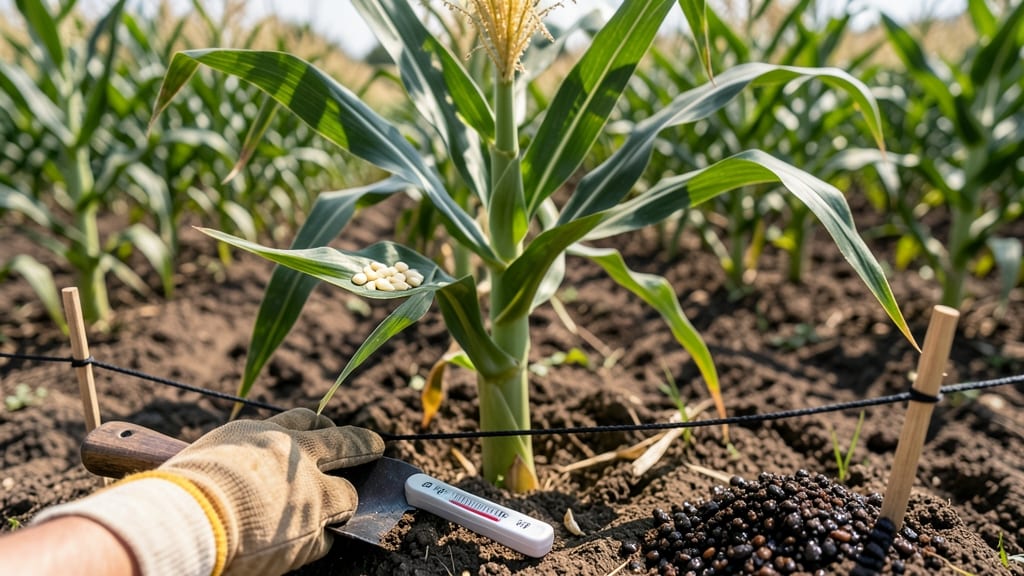
Pro tip: Use a soil thermometer to confirm readiness—corn seeds won’t sprout reliably below 50°F. I’ve seen seeds rot in 55°F soil even if air temps are warm. Plant 1–2 inches deep and space rows 30–36 inches apart for proper airflow and pollination.
🌾
One mistake I see often is planting late varieties too early in hopes of an extended season. This leads to tall, leggy plants that flop over before harvest. Instead, focus on staggered plantings: Sow half your seeds two weeks apart to ensure a continuous harvest window.
For example, plant ‘Ambrosia’ sweet corn (80 days) on April 25 and May 10 for fresh ears every 10–14 days.
Finally, account for microclimates. Gardens near Lake Erie (e.g., Ashtabula, Cleveland) may see later frosts, while inland areas (e.g., Akron, Canton) warm up
How to adjust planting dates for Northeast Ohio’s unpredictable weather patterns
Northeast Ohio’s spring is famously fickle—one week you’re shoveling snow, the next you’re sweating through a t-shirt. That’s why flexible planting dates are your best friend when growing corn. The average last frost date hovers around April 15, but that doesn’t mean you should rush.
Corn seeds need soil temperatures of 50°F+ for 10+ days to germinate reliably. If your soil is still chilly, wait it out—cold soil can delay germination by weeks.
I’ve planted corn in Ohio for years, and I’ve learned the hard way that soil temperature > calendar dates. Use a soil thermometer (just $10 at any garden center) to check depths of 1-2 inches.
If it’s consistently above 50°F, your seeds are ready to go. Pro tip: Morning soil temps are usually cooler, so check in the afternoon for the most accurate reading.
Here’s the real kicker—Northeast Ohio’s microclimates can vary wildly even within a few miles. If you live near Lake Erie, your frost dates might shift by a week or more compared to inland areas.
Use the National Weather Service’s frost probability maps or local CoCoRaHS data to fine-tune your timing. For example, Cleveland’s last frost often comes a few days earlier than Akron’s, so adjust accordingly.