
Plants
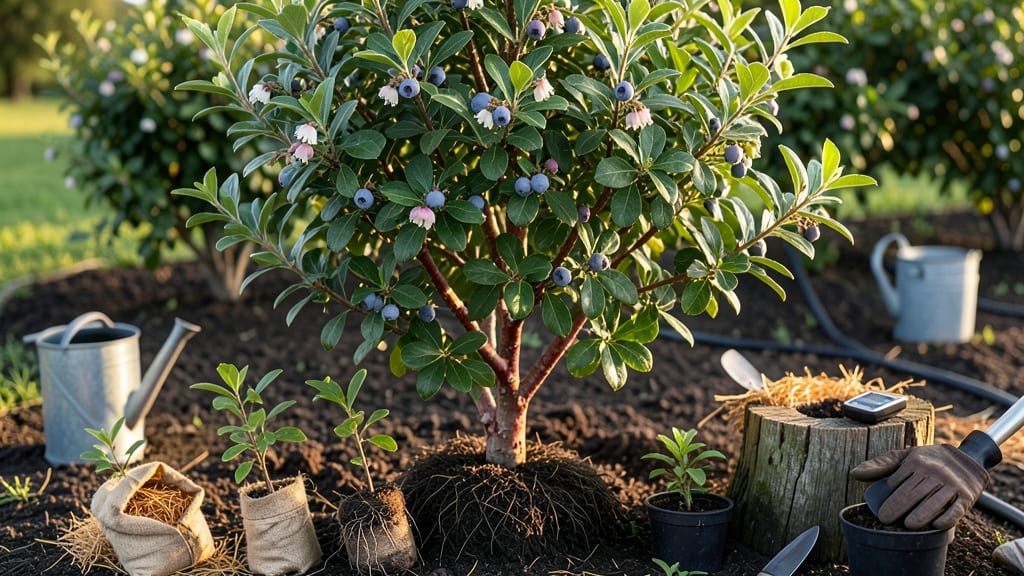
Planting blueberries in Mississippi might seem tricky with its warm winters, but timing is everything to ensure your 🫐 bushes thrive and produce juicy fruit year after year.
The key lies in balancing chill hours, frost risks, and soil prep—because getting it wrong could mean struggling with poor yields or even plant failure.
Most gardeners in USDA Zones 8a-9a know the ideal window runs from late winter to early spring, but the real secret is choosing the right varieties that match Mississippi’s 300-600 chill hours.
Southern highbush types like ‘Powderblue’ or rabbiteye varieties such as ‘Tifblue’ are perfect for this climate, and planting them in February or March gives roots time to establish before summer heat arrives.
Don’t overlook soil prep—blueberries demand acidic conditions (pH 4.5-5.5) and well-draining soil. If your yard’s natural pH is too high, amend it with sulfur or peat moss before planting.
I’ll walk you through the exact steps to set your blueberries up for success, from soil tests to frost protection tips that work in Mississippi’s unpredictable spring weather.
Ready to grow your own blueberries? Let’s break down the perfect planting timeline, variety recommendations, and care tips so you can enjoy a bountiful harvest from May to June. Your Mississippi garden could soon be bursting with these delicious, nutrient-packed berries—if you plant them right.
Mississippi blueberry planting timeline: chill hours & frost-free dates
Mississippi’s USDA Zones 8a-9a create a unique challenge for blueberry growers. Unlike northern climates, we don’t get the extended cold periods most blueberries need to set fruit. The key is choosing varieties that match our 300-500 chill hours and timing planting to avoid late frosts that can damage young plants.
Blueberries need dormancy periods to produce buds, but Mississippi’s mild winters mean we focus on Southern highbush and rabbiteye varieties that thrive with fewer chill hours. The ideal planting window balances frost risk and soil workability, typically falling between late February and early April.
Here’s how to determine your exact planting window using local data:
| Region | Avg. Last Frost | Ideal Planting Window | Chill Hours Needed |
|---|---|---|---|
| North MS (Zone 8a) | February 20 | March 1 - April 15 | 300-400 hours |
| Central MS (Zone 8a-8b) | February 10 | February 20 - March 30 | 400-500 hours |
| South MS (Zone 9a) | January 25 | February 1 - March 15 | 200-300 hours |
For northern Mississippi, aim to plant after February 15 to avoid late frosts that can damage tender new roots. In southern Mississippi, you can start as early as February 1, but be prepared for occasional 30°F nights that may require frost cloth protection for young plants.
Mississippi’s humidity and heat also play a role. Planting in early spring (March) gives roots time to establish before summer’s intense heat. Avoid planting in late spring, as the combination of high temperatures and drought can stress young bushes.
Pro tip: Use mulch immediately after planting to retain moisture and regulate soil temperature. A 3-inch layer of pine straw works perfectly for Mississippi’s climate while also lowering soil pH naturally, which blueberries love.
If you’re unsure about your exact chill hours, check with your local cooperative extension office—they can provide microclimate data specific to your area. For example, North Mississippi State University and Mississippi State University Extension offer free soil tests and planting guides tailored to our region.
Remember: Blueberries planted in Mississippi’s heat need consistent moisture for the first two growing seasons to establish strong root systems. Plan to water deeply 2-3 times per week during the first summer to prevent transplant shock.
🌱
Step-by-step planting guide for Mississippi blueberries: soil to sunlight
Now that you’ve nailed down the best planting window for Mississippi’s climate, let’s dive into the hands-on steps to get your blueberry bushes thriving. The difference between a healthy, fruit-bearing plant and one that struggles often comes down to soil prep and proper transplanting techniques.
Skip these steps, and you might end up with stunted growth or poor yields—so let’s do this right!
First, test your soil’s pH level. Blueberries are acid-loving plants and need a pH between 4.5 and 5.5. If your soil is too alkaline (common in Mississippi’s clay-heavy soils), amend it with peat moss or sulfur-based fertilizer at least 2-3 months before planting.
You can grab a soil test kit from local nurseries like Mississippi State University Extension offices or online retailers.