
Plants
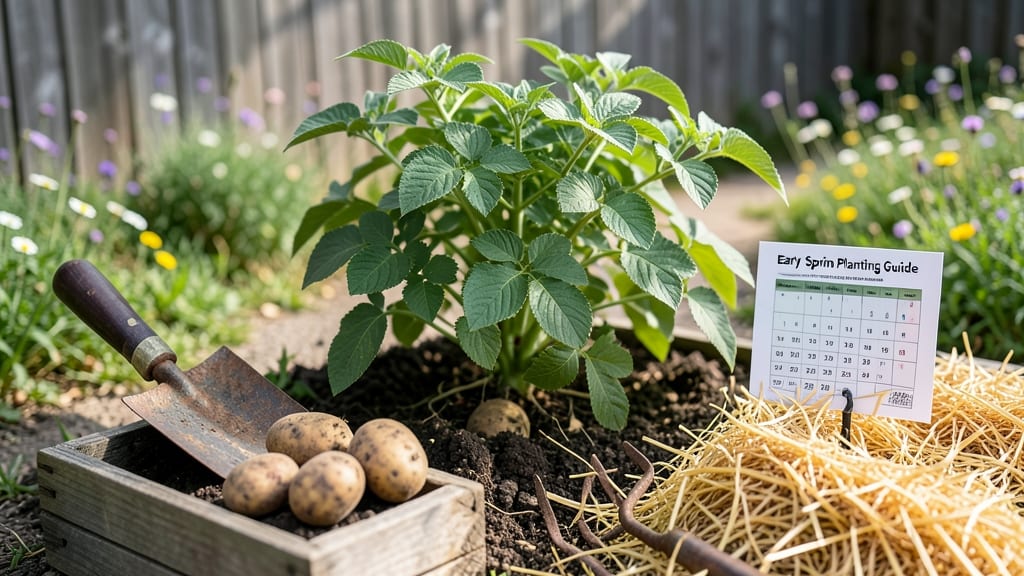
If you’ve ever stared at your seed potatoes wondering when should you plant potatoes in Ohio, you’re not alone—Ohio’s fickle spring weather turns timing into a high-stakes gamble. Plant too early, and a late frost will kill your sprouts; too late, and your harvest shrinks.
The secret lies in a 4-6 week window before your last frost date, but Ohio’s USDA Zone 6a adds extra layers to consider.
Most Ohio gardeners aim for early March to mid-April, but your exact timing depends on soil temperature (wait until it hits 45°F) and your potato variety. Early types like ‘Yukon Gold’ can handle cooler soils, while late varieties need warmer conditions to thrive.
Skipping this step means risking scab or blight—both common in Ohio’s humid summers.
Here’s the game-changer: use your local frost date average (Columbus typically sees last frost around April 15) and adjust for your microclimate. Whether you’re in Cincinnati’s urban heat islands or Toledo’s cooler lakeshore, these tweaks ensure your 🥔 plants emerge strong and avoid the “waiting game” that wastes weeks.
Ready to nail your planting schedule? I’ll walk you through exact weeks before last frost, soil prep tricks, and how to spot Ohio’s sneaky weather red flags—so you can go from guessing to growing a bountiful harvest every time.
Ohio potato planting timeline: exact weeks before last frost by variety
Ohio gardeners face a unique challenge with potato planting—our USDA Zones 4-7 bring unpredictable frost dates that can vary by 2-3 weeks between northern and southern regions. Unlike warmer climates, timing matters more here because potatoes won’t tolerate frost and need consistent soil temperatures above 45°F to sprout properly.
For most of Ohio, the last frost date falls between April 15-30, but this shifts earlier in Toledo (Zone 6a) and later in Cleveland (Zone 5b). Planting too early risks frost damage, while waiting too long shortens the growing season.
The sweet spot? 4-6 weeks before your average last frost, adjusted by potato variety.
Here’s your Ohio-specific planting timeline broken down by region and variety type, so you can match your seed potatoes to your local climate for maximum yield.
| Variety Type | Days to Maturity | Planting Window (Before Last Frost) | Best Ohio Regions | Soil Temp Requirement |
|---|---|---|---|---|
| Early Varieties (Yukon Gold, Red Norland) | 60-90 days | 4-5 weeks before last frost | Northern Ohio (Cleveland, Akron) | 45-50°F minimum |
| Mid-Season (Kennebec, Russet) | 90-110 days | 3-4 weeks before last frost | Central Ohio (Columbus, Dayton) | 50-55°F minimum |
| Late Varieties (Purple Viking, Fingerlings) | 110-130 days | 2-3 weeks before last frost | Southern Ohio (Cincinnati, Toledo) | 55°F+ minimum |
If you’re in northern Ohio (Zones 5a-5b), aim to plant early varieties like Yukon Gold in late March to early April, about 6 weeks before frost. These potatoes mature quickly enough to avoid summer blight risks.
For central Ohio (Zone 6a), mid-season varieties like Kennebec thrive when planted in mid-April, giving them 90-110 days to bulk up before frost.
Southern Ohio gardeners can push the envelope with late varieties like Purple Viking, planting as late as mid-April (just 2-3 weeks before frost) to enjoy a longer harvest window. However, these need warmer soil temperatures—wait until the ground reaches 55°F to avoid rotting seed potatoes.
Pro tip: Use a soil thermometer to confirm readiness. Potatoes won’t sprout until soil hits 45°F, but 50°F+ ensures faster germination. If your soil is still cold in April, consider black plastic mulch to warm it up 2-3 weeks faster.
For container growing, plant early varieties only in late April—containers cool faster and can’t retain heat like in-ground beds. Fill pots with well-draining mix and place them in full sun to compensate.
Remember: Ohio’s short growing season means every day counts. Planting at the wrong time risks scab disease (from wet, cool soil) or underdeveloped tubers. Stick to these timelines, and you’ll harvest plump, disease-free potatoes by July or August.
How to adjust planting time for Ohio’s unpredictable weather patterns
Ohio’s spring weather can swing from freezing nights to unseasonable warmth in days, making potato planting a delicate balance. The key is adjusting your schedule based on soil temperature (not air temperature) and using tools like row covers or cold frames to extend your growing window.
For example, if your last frost date is April 15 but soil stays below 45°F until April 25, delay planting until then—cold soil slows germination and invites rot.
I’ve planted potatoes in Ohio for over a decade, and I’ve learned that microclimates matter. A garden near Lake Erie might see frost 2 weeks later than one in Cincinnati’s urban heat zone.
Use your local weather station data (or a 3-year average) to pinpoint your real last frost date. For instance, Toledo’s average last frost is April 20, but I’ve seen it creep to May 5—so I plant my late varieties in early May as a backup.
Another trick? Warm your soil with black plastic mulch 2 weeks before planting. This raises soil temps by 5-10°F, letting you plant earlier. Just remove the plastic once sprouts emerge to avoid overheating.
Pair this with a row cover for extra frost protection—it’s like giving your potatoes a cozy blanket until the danger passes.
🌱 5 Pro Tips to Adjust for Ohio’s Weather
- 📅 Use a soil thermometer—plant only when soil hits 45°F at 4" depth. Air temp doesn’t count!
- 🛡️ Add row covers for 2-3 weeks post-planting if frost threatens. Secure edges with soil or bricks.
- 🔥 Warm soil faster with black plastic mulch or straw. Remove after sprouts appear.
- 🌡️ Track your microclimate: Urban areas warm up 1-2 weeks earlier than rural zones.
- 📝 Keep a planting journal to note when your soil actually warms up—your data beats averages!
Don’t overlook late planting strategies either. If spring drags on, try late-season varieties like ‘Red LaSoda’ or ‘Kennebec’ planted in early May. These tolerate cooler soils and still yield 60-80% of a normal harvest. Just expect smaller tubers—trade-offs are part of Ohio gardening!
Finally, watch for Ohio’s sneaky weather red flags: If your dandelions bloom early or robins return, soil is warming fast. Conversely, if ice forms on car windshields in April, delay planting. These natural cues often beat the calendar.
With these adjustments, you’ll turn Ohio’s unpredictable weather into an advantage—planting at the perfect moment for your microclimate, not just the average. Your 🥔 harvest will thank you!