
Plants
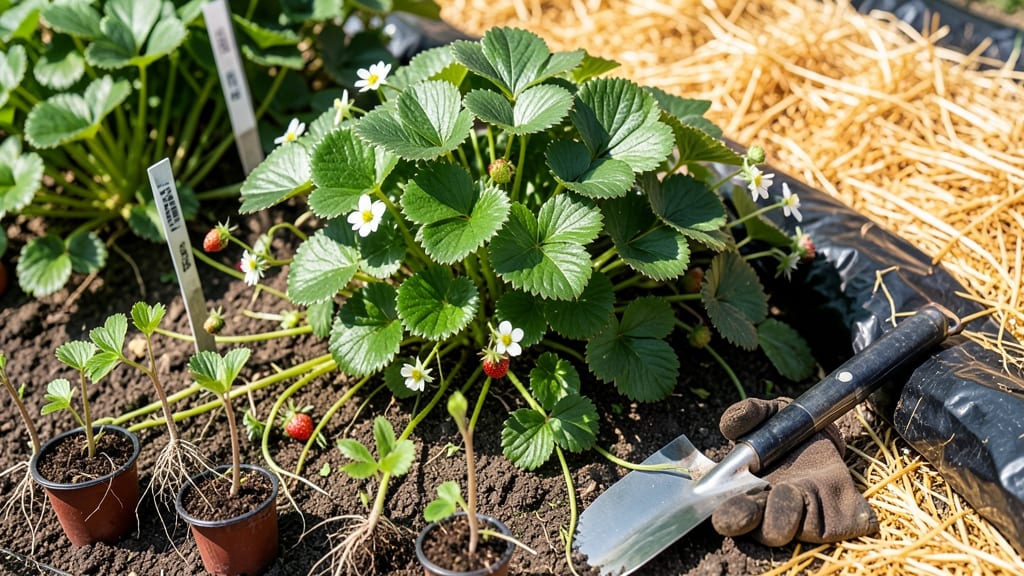
Planting strawberries in Kentucky at the wrong time can mean the difference between a juicy summer harvest and a sad, frost-bitten failure.
The key to success lies in understanding your local microclimate—whether you're in the Bluegrass region or the Appalachian foothills—because those 10-degree temperature swings can shift your planting window by weeks.
For most of Kentucky's USDA Zone 6a, the ideal windows are March-April for spring planting and September-October for fall varieties. But here's the catch: if you're in western Kentucky near the Ohio River, you might need to wait another week or two for the soil to warm up properly.
That's why knowing your last frost date isn't enough—you need to understand how your specific location behaves.
I've grown strawberries in Kentucky for years, and let me tell you, timing isn't just about the calendar. It's about soil temperature, day length, and even how much mulch you use.
Get this right, and you'll be enjoying homegrown 🍓 all summer long. Get it wrong, and you'll be starting over next year.
In this guide, I'll walk you through exactly when to plant—whether you're working with bare-root plants or potted varieties—and how to adjust for your specific corner of Kentucky. We'll cover everything from preparing your beds to post-planting care that keeps your strawberries thriving until harvest time.
Kentucky strawberry planting zones: exact dates by microclimate for frost-free success
Kentucky’s USDA zones 5-7 create a complex patchwork of frost risks, meaning your strawberry planting dates can vary by 2-4 weeks depending on whether you're in Lexington's urban heat island or the Appalachian foothills.
The average last frost hovers around April 15, but microclimates push this window from March 20 in Louisville to May 1 in higher elevations. Let’s break down the optimal planting windows for both bare-root and potted strawberries across Kentucky’s key regions.
For June-bearing varieties (like Jewel or Chandler), your primary planting window is March 15–April 15, while everbearing and day-neutral types (such as Seascape or Albion) can tolerate a late-summer extension until September 15.
Southern Kentucky’s warmer microclimates may even allow fall planting up to October 1, but only if soil temps stay above 45°F.
🌱 Pro Tip: Use a soil thermometer—strawberries need 40°F+ soil to thrive. If your yard runs cold, opt for black plastic mulch to warm the soil by 5-10°F.
📅 Kentucky Strawberry Planting Calendar by Region
| Region | USDA Zone | Spring Planting Window | Fall Planting Window | Key Variety Notes |
|---|---|---|---|---|
| Northern KY (e.g., Paducah) | Zone 6b | April 1–April 15 | September 1–September 15 | June-bearing: Chandler; Everbearing: Seascape |
| Central KY (e.g., Louisville, Lexington) | Zone 6a-7a | March 20–April 10 | September 10–October 1 | Day-neutral: Albion; Heat-tolerant: Camarosa |
| Eastern KY (e.g., Pikeville, Appalachian foothills) | Zone 5b-6a | April 15–May 1 | September 1–September 10 | Cold-hardy: Honeoye; Everbearing: Ozark Beauty |
| Western KY (e.g., Paducah, near Lake Barkley) | Zone 7a | March 1–March 31 | September 15–October 10 | Heat-resistant: Fort Laramie; Early producer: San Andreas |
💡 Note: Adjust for elevations above 1,000 ft—add 1-2 weeks to planting dates.
If you’re planting bare-root strawberries, soak roots in lukewarm water for 1-2 hours before planting to reduce transplant shock.
For potted plants, harden them off by placing them outdoors for 3-5 days before the final transplant. Everbearing varieties planted in late summer will often produce a small fall harvest before winter.
🌡️ Soil Temperature Matters: Strawberries won’t establish roots well in cold soils. Use a soil thermometer to confirm temps are 45°F+ before planting. In northern Kentucky, this might not happen until mid-April, while southern regions can plant as early as late February.
For container growing, Kentucky gardeners can extend the season by planting potted
5 Critical factors that change your Kentucky strawberry planting timeline (beyond the calendar)
Kentucky's strawberry planting timeline isn't just about checking a calendar—it's about understanding five critical factors that can shift your perfect window by weeks. I've learned this the hard way after planting too early in cold northern Kentucky soils and watching my strawberries struggle.
The first factor is soil temperature, which must reach at least 40°F for bare-root plants and 50°F for potted varieties before planting.
For most of Kentucky's USDA Zone 6a, this typically means waiting until mid-April in northern regions, but southern Kentucky near Paducah can plant as early as late March.
The second factor is elevation differences—mountainous areas like the Appalachian foothills stay colder longer, often delaying planting by 1-2 weeks compared to the Bluegrass region.
Here's where things get tricky: local weather patterns like lake-effect cooling from the Ohio River can drop temperatures unexpectedly in western Kentucky. I once planted in early April near Hopkinsville only to have a late frost that damaged half my plants.
The solution? Use a soil thermometer and wait until the ground consistently stays above 45°F for 5+ days.
🌱
The fourth factor is mulching methods, which can actually advance your planting window. I've found that using straw mulch (not black plastic) warms the soil 5°F faster in spring, allowing me to plant 10 days earlier in northern Kentucky.
The final factor is strawberry variety sensitivity—June-bearing types like Jewel prefer cooler soils, while everbearing varieties like Seascape thrive in warmer conditions.
To test soil readiness, insert a soil thermometer 2 inches deep in your prepared bed. For bare-root plants, aim for 40-50°F; for potted varieties, wait until 50-60°F.
In western Kentucky, I often check temperatures near sunrise and sunset—those are the most critical times for late frosts. Pro tip: Plant everbearing varieties in late summer (August-September) to avoid spring's unpredictable weather entirely.
🌿