
Plants
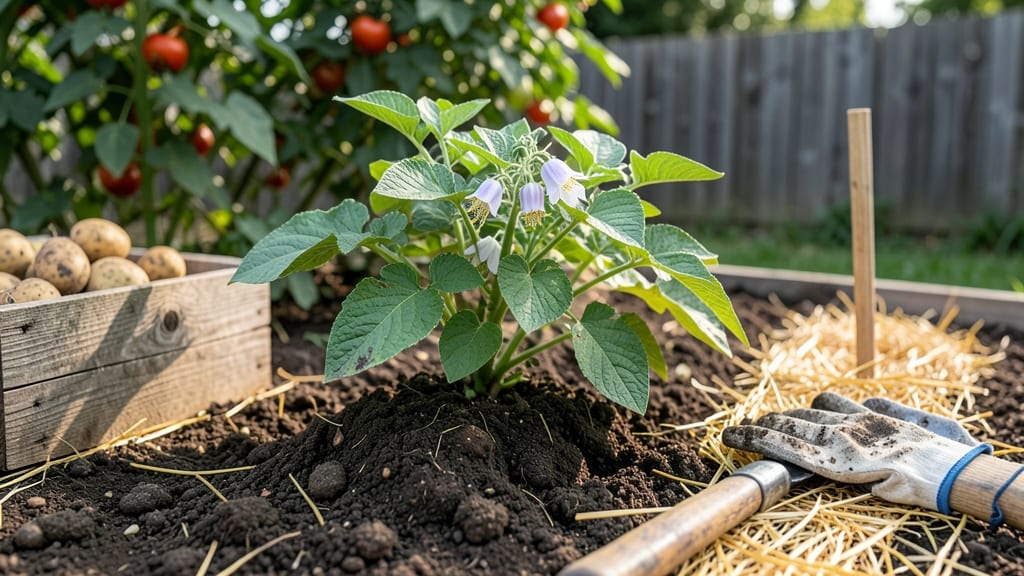
When do you plant potatoes in Idaho? Timing your 🥔 potato planting in Idaho isn't just about the calendar—it's a high-stakes balance between chill-hour needs and frost dates that can make or break your harvest. Plant too early, and you risk bolting; too late, and your yields suffer. But here's the good news: with the right variety and a few local tricks, you can outsmart Idaho's unpredictable climate for perfect spuds every season.
Most Idaho gardeners know spring is potato season, but the exact window varies dramatically from the Panhandle to the Magic Valley. The key? Matching your planting dates to your specific USDA zone (4b-7b) and the chill-hour requirements of your chosen variety.
For example, early varieties like Kennebec thrive when planted as soon as soil reaches 45°F, while late-season favorites need that extra time to mature before frost hits.
What you'll discover here is how to read Idaho's frost patterns like a pro—when to start seed potatoes in February for early varieties, how to adjust for late springs, and which varieties actually perform best in your microclimate.
We're talking zero bolt risk and maximum yield potential, whether you're in Boise, Twin Falls, or Lewiston.
Ready to grow potatoes that rival Idaho's famous farm-fresh quality? Let's break down the exact planting windows, variety recommendations, and pro tips that'll have you harvesting golden potatoes from July through September—no guesswork required.
Idaho’s ideal potato planting window by chill-hour zone
Timing your potato planting in Idaho isn’t just about avoiding frost—it’s about matching your variety to chill-hour zones. Idaho spans USDA zones 4b-7b, but its three distinct chill-hour regions (low, medium, high) dictate when to plant for maximum yield.
The Panhandle (Coeur d’Alene, Sandpoint) needs early planting, while Magic Valley (Twin Falls, Burley) can wait until late April. Boise sits in the middle, with a 30-day window between frost risks.
Your last frost date is your anchor, but soil temperature matters more. Potatoes thrive when soil hits 45°F (7°C)—test it with a soil thermometer before planting. In northern Idaho, aim for late March to early April; in southern Idaho, mid-April to early May works best.
Pro tip: Use black plastic mulch to warm cold soils faster in high-elevation areas like McCall.
Here’s how Idaho’s chill-hour zones break down for foolproof planting:
| Chill-Hour Zone | Key Cities | Last Frost Date | Ideal Planting Window | Soil Temp Goal |
|---|---|---|---|---|
| Low (<1,500 hrs) | Coeur d’Alene, Sandpoint | April 10–15 | Late March–early April | 45°F (7°C) |
| Medium (1,500–2,500 hrs) | Boise, Moscow | April 15–May 1 | Early–mid April | 45°F (7°C) |
| High (>2,500 hrs) | Twin Falls, Burley | May 1–10 | Mid–late April | 45°F (7°C) |
Bolting risk spikes if you plant too early—potatoes need cool soil to sprout, but warm air triggers premature flowering. In Lewiston, for example, planting before March 20 risks bolting, while late April is safer. Use row covers if an unexpected frost hits after planting to protect tender shoots.
For fall planting (a niche but viable option in southern Idaho), aim for late July to early August—tubers need 90–120 days to mature before the first frost. This works best for early-maturing varieties like Kennebec or Red LaSoda, which can handle Idaho’s short growing season in high-elevation areas.
Pro move: Check Idaho’s USDA frost maps (updated annually) and local Cooperative Extension Service reports for your county. For instance, Bonner County (Panhandle) has a 10-day earlier frost date than Twin Falls, so adjust accordingly. If you’re unsure, plant a test row in early April—you can always cover it if frost threatens.
Key takeaway: Idaho’s chill-hour zones aren’t just about frost—they’re about soil warmth and daylength. Plant low-chill varieties (like Yukon Gold) in the Panhandle, and medium-to-high-chill types (like Russet Burbank) in the south. This ensures tubers bulk up before Idaho’s short summer ends.
🌱
Best potato varieties for Idaho’s climate and their planting rules
Idaho’s diverse climate—from the cool Panhandle to the warmer Magic Valley—means not all potato varieties thrive equally. To avoid bolting (premature flowering) or stunted growth, choose varieties matched to your chill-hour zone. Here’s my breakdown of the top 10 Idaho-adapted potatoes and their planting windows.
For low-chill zones (e.g., Boise, Twin Falls), prioritize early-maturing varieties like Kennebec or Red LaSoda. These need fewer chill hours (300–500) and can handle Idaho’s short growing seasons. Plant them late March to early April when soil hits 45°F to avoid frost damage.
If you’re in higher-chill zones (e.g., Lewiston, Coeur d’Alene), opt for late-season varieties like Russet Burbank or Purple Viking. These need 500+ chill hours and can handle Idaho’s cooler springs. Plant them mid-April to align with soil warming and avoid frost.
For containers or late starts, Fingerling potatoes are my go-to—they mature in 80–100 days and tolerate Idaho’s unpredictable springs. Just plant them after the last frost (usually mid-April) in well-draining soil with 6+ hours of sun.
Pro tip: Cut seed potatoes into 2-ounce pieces with 1–2 eyes each, but let them cure for 24 hours before planting. This speeds up sprouting in Idaho’s cool soils. Avoid planting green potatoes—they contain solanine, which can harm your crop.
🌱