
Plants
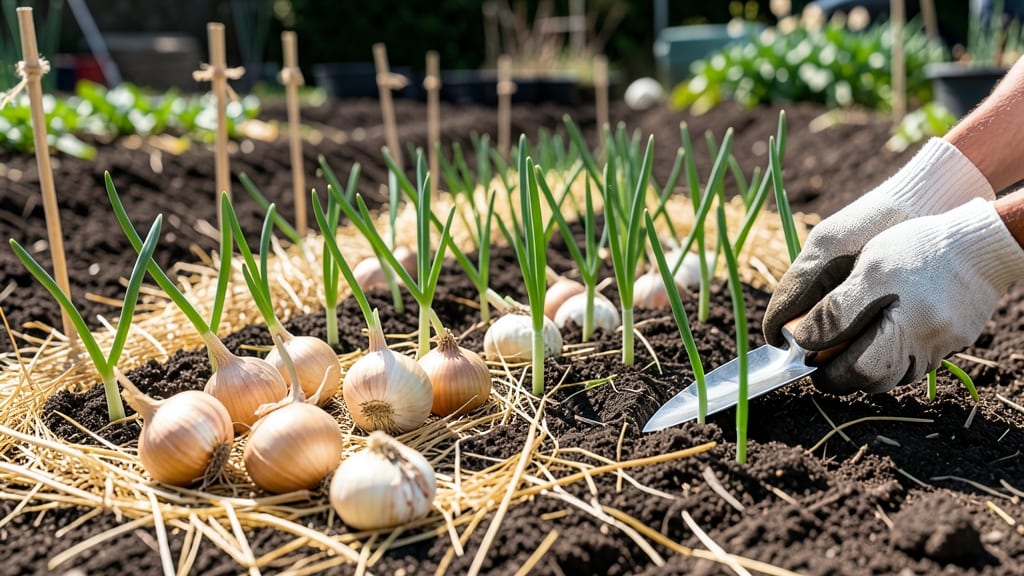
If you’ve ever wondered when to plant onions in Oklahoma, timing is everything—get it wrong, and you might end up with bitter bulbs or no harvest at all. Oklahoma’s 6b-7a climate gives you two prime windows: early spring or late summer, but the devil’s in the details.
Planting too early risks frost damage, while waiting too long can lead to bolting or poor bulb formation. The key is aligning your variety—whether short-day or long-day—with Oklahoma’s 200 frost-free days. For spring plantings, aim for February to March; for fall harvests, late summer sets the stage.
Whether you’re growing sweet onions for fresh eating or storage varieties, I’ll break down the exact calendar for your region—plus pro tips to avoid common mistakes. Let’s turn your onion dreams into a bountiful harvest.
From soil prep to harvest timing, you’ll learn how to work with Oklahoma’s climate instead of against it. Ready to dig in?
Oklahoma onion planting calendar by variety type (short-day vs long-day needs)
Oklahoma’s USDA Zones 6b-7a create a unique challenge for onion growers. The state spans both short-day (southern) and long-day (northern) varieties, meaning planting timing varies dramatically from Tulsa to the Panhandle.
Short-day onions thrive in Oklahoma’s heat, while long-day varieties need cooler spring conditions to form bulbs. Let’s break down the perfect planting windows for each type.
Most gardeners in Oklahoma plant onions twice a year: once in early spring (February-March) for summer harvest, and again in late summer (July-August) for fall harvest. However, your onion variety determines which method works best.
Short-day onions like ‘1015Y Yellow’ or ‘Texas Early White’ bolt (go to seed) if planted too early, while long-day varieties like ‘Sweet Sandwich’ struggle in southern Oklahoma’s heat.
Here’s the key rule: Plant short-day onions in late summer for fall harvest, and plant long-day onions in early spring before March 15 (average last frost date). This timing prevents bolting and ensures plump, storage-friendly bulbs.
For seed starts, begin indoors 8-10 weeks before transplanting (around January for spring plantings). If you’re using onion sets (small bulbs), plant them directly into the garden 4-6 weeks before your last frost date or in July-August for fall harvest.
Oklahoma’s microclimates also play a role. Northern cities like Oklahoma City can handle long-day varieties in spring, while southern regions like Lawton or Altus should focus on short-day onions planted in late summer.
The difference in daylight hours (critical for onion bulb formation) can mean the difference between a bountiful harvest and a disappointing yield.
🌱
If you’re growing onion sets (pre-grown bulbs), plant them 1 inch deep and 4 inches apart in rows 12-18 inches apart. For seed starts, thin seedlings to 3-4 inches apart once they’re 2-3 inches tall to give bulbs room to swell.
Overcrowding leads to small, weak onions—a common mistake in Oklahoma gardens.
For fall plantings, aim to harvest before November 1 (first frost date). If you miss this window, mulch heavily with straw to protect bulbs from freezing.
Storage onions like ‘Yellow Granex’ can last 2-3 months in a cool, dry place, while green onions can be harvested continuously for fresh greens all season.
One final tip: Soil temperature matters. Onions prefer 50-65°F soil. In Oklahoma’s spring, wait until soil warms to 55°F before planting sets or transplants. Use a soil thermometer to check—cool soil slows germination and can lead to poor bulb formation.
🌿
How Oklahoma’s microclimates affect onion planting success (zone-specific tips)
Oklahoma’s diverse climate zones—from the cooler highlands to the hotter southern plains—mean your onion planting timeline should vary by location. In Oklahoma City (Zone 7a), for example, you’ll have 10-14 extra frost-free days compared to rural areas like Lawton (Zone 7b), where heat arrives earlier.
These microclimate differences can mean the difference between a thriving crop and a failed harvest.
For northern Oklahoma, like Tulsa or Woodward, aim to plant onion sets or transplants 4-6 weeks before your last frost date (typically mid-March). Southern regions, such as Altus or Lawton, can push planting back slightly to late February due to earlier warming trends.
Meanwhile, high-elevation areas (e.g., near Ski Apache) may need to wait until early April to avoid late spring frosts.
🌱 Pro Tip: Use your local Cooperative Extension Service frost date maps to fine-tune your schedule. For instance, Tulsa’s average last frost is March 15, while Lawton’s is March 22—a 7-day difference that matters for onions.
| Location | USDA Zone | Ideal Planting Window | Key Risk |
|---|---|---|---|
| Oklahoma City | 7a | Feb 20–March 15 | Late frosts (March) |
| Tulsa | 7a | Feb 25–March 20 | Heat stress (June) |
| Lawton | 7b | Feb 15–March 10 | Bolting (early heat) |
| Altus | 7b | Feb 20–March 5 | Drought (summer) |
| High-Elevation (Ski Apache) | 6b | March 15–April 5 | Late frosts (May) |
Soil conditions also vary by region. Clay-heavy soils in eastern Oklahoma (e.g., near Muskogee) drain poorly, while sandy soils in western Oklahoma (e.g., near Guymon) dry out quickly.
Test your soil’s pH (6.0–7.0 ideal) and amend with compost or sulfur to prevent bolting or stunted growth. In drought-prone areas, mulch heavily to retain moisture.
For fall harvests, plant sets in late July to early August across most of Oklahoma. However, southern regions (e.g., Lawton) can extend this to mid-August due to longer heat retention. Always choose short-day varieties like ‘Texas Early White’ for southern Oklahoma to avoid bolting.
🌿 Remember: Oklahoma’s unpredictable weather means flexibility is key. Monitor forecasts and adjust planting dates if late frosts or early heat arrive. With the right adjustments, you’ll harvest sweet, pungent, or storage onions—no matter where you garden in the state.