
Plants
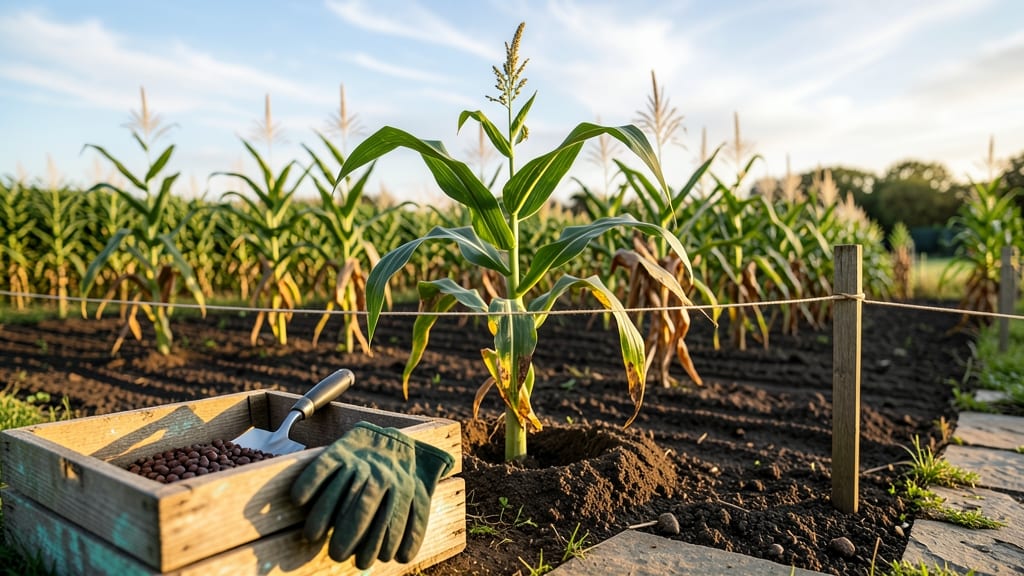
Timing your 🌽 corn planting in Colorado isn’t just about the calendar—it’s about catching that sweet spot between frost risks and soil warmth. Get it wrong, and you’ll either wait weeks for germination or watch your tender seedlings freeze before they even sprout.
But nail the soil temperature triggers, and you’ll unlock faster growth, stronger stalks, and ears packed with sweet kernels by summer.
Colorado’s USDA Zones 5-7 throw a curveball with their dramatic temperature swings, especially at higher elevations. While gardeners in the Front Range might start as early as mid-April, those on the Western Slope often wait until late May to avoid late frosts.
The key? Waiting until the soil hits a steady 60°F—that’s when your corn seeds will spring to life in just 5-7 days, not the frustrating two weeks you’d face if you plant too soon.
I’ve seen firsthand how a just-right planting window transforms a gamble into a guaranteed harvest. Whether you’re in Denver’s urban gardens or the wide-open plains near Fort Collins, this guide will help you read your microclimate like a pro.
No more guessing—just data-backed timing to ensure your corn thrives from seed to silks.
Ready to skip the trial-and-error? Let’s break down exactly when to drop those seeds in your Colorado soil, plus pro tips to handle everything from unexpected cold snaps to scorching heat waves. Your July harvest starts with the right move now.
Optimal soil temperature ranges for planting corn in Colorado’s climate zones
Colorado’s diverse elevations create unique challenges for growing corn. Unlike coastal regions, our high-altitude zones and temperature swings demand precise planting timing. Corn seeds need consistent warmth to germinate—50°F minimum but 60°F+ ideal—or they’ll rot in cold soil.
In Denver’s Front Range, this typically means waiting until late April, while Western Slope valleys like Grand Junction can plant weeks earlier.
The key difference? Altitude affects soil temperature. A 5,000-foot elevation garden warms 2-3 weeks slower than one at 4,500 feet. That’s why I always check soil temperature (not air temperature) before planting.
A simple soil thermometer ($10 at garden centers) reveals whether your plot is ready—or if you should wait another week.
Corn thrives in USDA Zones 4-7, but Colorado’s microclimates create exceptions.
For example, Boulder County (Zone 5) may see 60°F soil by early May, while Montrose (Zone 6) might not hit that mark until late May. Eastern Plains like Limon can plant as early as mid-April, but mountain valleys like Gunnison often wait until June.
Here’s the critical rule: Corn seeds won’t germinate below 50°F, and slow germination leads to weak stalks and pest vulnerabilities. If your soil hovers around 55°F, germination takes 14+ days—double the ideal time. That’s why I prioritize warmth consistency over rushing the season.
Another factor? Nighttime temperatures. If nights dip below 45°F after planting, young seedlings may stunt or die. That’s why I monitor 5-day forecasts and adjust planting dates accordingly. For example, if a cold snap is predicted, I’ll delay planting even if soil temps are perfect.
🌽 Pro Tip: Use black plastic mulch to warm soil 5-10°F faster in cooler zones. This trick lets me plant 2-3 weeks earlier in high-altitude gardens without risking frost damage.
Now, let’s break down the exact soil temperature triggers for Colorado’s three main regions—because a Front Range garden differs drastically from a Western Slope plot.
| Region | Avg. Last Frost | Ideal Soil Temp | Planting Window | Key Risk |
|---|---|---|---|---|
| Front Range (Denver, Boulder, Fort Collins) | April 15–May 1 | 60–65°F | Late April–mid-May | Late frosts |
| Western Slope (Grand Junction, Durango, Gunnison) | May 1–June 1 | 55–60°F | Early May–early June | Slow soil warming |
| Eastern Plains (Limon, Sterling, Greeley) | April 1–April 15 | 65–70°F | Mid-April–early May | Heat stress |
🌡️ Note: Adjust for your specific elevation—add 1 week per 1,000 ft above 5,000 ft.
For example, if you’re in Fort Collins (5,500 ft), aim for 60°F soil by May 1—not April. Meanwhile, Grand Junction (4,500 ft) can plant 3 weeks earlier because its soil warms faster. Elevation is everything in Colorado corn growing!
One common mistake? Planting too early because air temperatures feel warm. Soil stays 10–15°F colder than air, especially in shady or high-altitude spots. That’s why I always test soil temperature at 6 AM (when it’s coldest) to avoid false optimism.
💡 Local Tip: Check Colorado State University’s frost maps (csus.edu) for your specific county. Their 10-year averages help predict last-frost dates with surprising accuracy. For example, Pueblo’s last frost is 2 weeks earlier than Denver’s—so adjust your planting window accordingly.
Finally, remember: Corn is sensitive to cold snaps after germination. If a 32°F night hits within 2 weeks of planting, seedlings can die. That’s
Best planting windows by Colorado region: Front Range vs. Western Slope vs. Eastern Plains
Colorado’s diverse geography means your corn planting timeline should match your region’s unique climate. The Front Range (Denver, Boulder) has the earliest windows, while the Western Slope (Grand Junction, Durango) often waits until late May.
The Eastern Plains (Fort Collins, Lamar) typically starts slightly earlier than the Western Slope but later than Denver. Let’s break down the ideal planting windows for each zone.
For the Front Range, aim to plant between April 15 and May 15. This window accounts for the area’s last average frost date of April 15 and ensures soil temperatures reach the 60°F minimum for germination.
If you’re in higher elevations (6,000+ ft), push planting back to early May to avoid late frosts.
The Western Slope has a shorter growing season due to its higher altitude and later frost dates. Plant between May 1 and June 1 to avoid early-season frosts and take advantage of the region’s longer summer days.
Varieties like ‘Golden Bantam’ or ‘Pintado’ are excellent choices for their shorter maturity times (60-70 days).
On the Eastern Plains, where summers are hotter and drier, plant between April 1 and May 10. This area benefits from warmer soil temperatures earlier in the season, but be cautious of sudden cold snaps in April.
Heat-tolerant varieties like ‘Silver Queen’ or ‘Peaches and Cream’ thrive here and can handle the region’s intense summer heat.
| Region | Planting Window | Last Frost Date | Ideal Varieties | Key Consideration |
|---|---|---|---|---|
| Front Range | April 15–May 15 | April 15 | ‘Ambrosia,’ ‘Bodacious’ | Elevations above 6,000 ft may need later planting |
| Western Slope | May 1–June 1 | May 10 | ‘Golden Bantam,’ ‘Pintado’ | Shorter growing season; prioritize early-maturing varieties |
| Eastern Plains | April 1–May 10 | April 1 | ‘Silver Queen,’ ‘Peaches and Cream’ | Hotter summers; use drought-tolerant varieties |
If you miss the ideal window, don’t panic! The Western Slope can sometimes squeeze in a late planting by June 15 using fast-maturing varieties, while the Front Range may extend to early June.
However, late plantings risk shorter stalks and smaller ears. For a backup plan, consider starter plants or row covers to protect young seedlings from unexpected cold snaps.
Pro tip: Check your local Cooperative Extension office for region-specific frost data. They often provide 10-day forecasts that can help you fine-tune your planting schedule. For example, Denver’s last frost date can vary by up to 10 days from year to year—so flexibility is key!
Remember, corn thrives on consistent warmth, so even if you plant on time, monitor soil temperatures daily. If nights dip below 50°F, use row covers or black plastic mulch to keep roots warm.
With the right timing and a little local know-how, you’ll be harvesting plump, sweet ears by midsummer!