
Watering
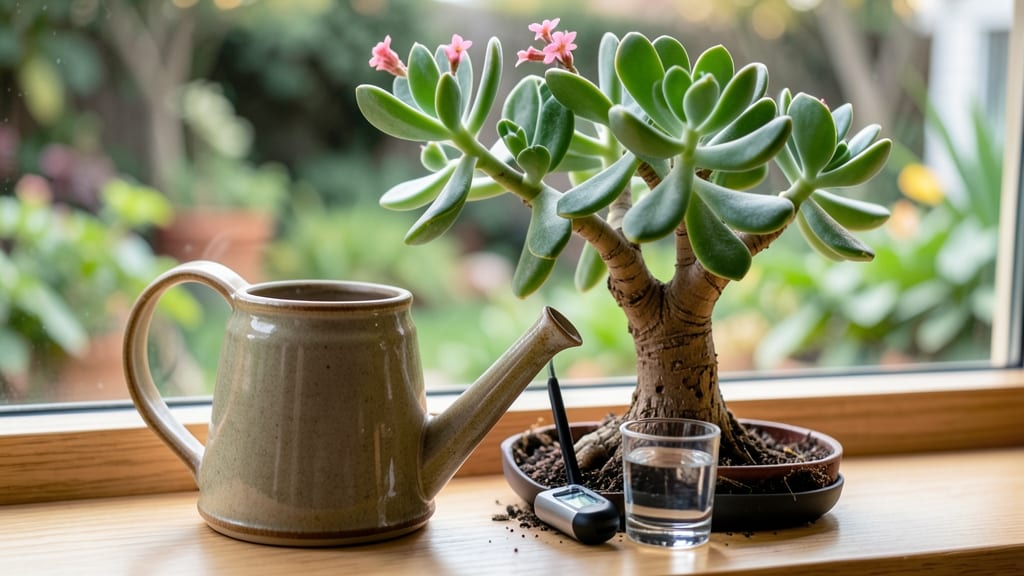
If you're wondering about jade plant how much water your succulent needs, you're probably seeing wrinkled leaves or mushy stems—and that’s a clear sign of overwatering. The key to keeping this drought-loving plant thriving lies in understanding its exact water needs, which are far less frequent than most people think.
Jade plants store water in their plump leaves, so they actually thrive on neglect rather than constant moisture. The secret is learning when the soil is truly dry enough between waterings, and how seasonal changes affect your schedule.
Let me show you the simple but critical steps to water your jade plant correctly.
We'll cover the science-backed watering frequency by season, how to test soil moisture without guesswork, and why your pot's drainage system makes all the difference. With these insights, you'll never have to worry about root rot or wasted water again.
Whether you're a beginner or a seasoned plant parent, these jade plant watering secrets will transform your care routine. Let's get your succulent back to its happy, healthy self with just the right amount of water—no more, no less.

How much water does a jade plant really need? (Science-backed schedule)
Jade plants (Crassula ovata) are succulents, meaning they store water in their thick, plump leaves and stems. This means they need far less water than most houseplants—often just every 2-3 weeks during active growth.
But here's the catch: overwatering causes root rot, while underwatering leads to wrinkled leaves. The key is balancing moisture with the plant's natural drought tolerance.
Your jade plant's watering needs depend on three critical factors: season, pot size, and environmental conditions. In summer, when growth accelerates, you might water every 3-4 weeks, while winter dormancy can stretch that to every 4-6 weeks.
Smaller pots dry out faster than large containers, and bright, dry air increases evaporation rates.
Most gardeners make the mistake of sticking to a rigid schedule. Instead, I check soil moisture by inserting my finger 1-2 inches deep—if it feels dry, it's time to water.
If damp, wait another week. This finger test is far more reliable than guessing based on days since last watering.
Another common error is watering from the top without drainage. Jade plants need well-draining soil and pots with holes. Without these, excess water pools at the roots, creating anaerobic conditions that suffocate the plant. Always water until it drains freely from the bottom.
🌱 Jade Plant Watering Schedule by Season
| Season | Watering Frequency | Soil Check | Water Amount |
|---|---|---|---|
| Spring | Every 2-3 weeks | Finger test (1-2" deep) | 50-100ml (1/3 cup) |
| Summer | Every 3-4 weeks | Dry 2" deep | 75-150ml (1/2 cup) |
| Fall | Every 2-3 weeks | Top 1" dry | 50-100ml (1/3 cup) |
| Winter | Every 4-6 weeks | Completely dry | 25-50ml (1 tbsp) |
*Adjust for humidity: Add 1 extra week in high humidity (60%+), subtract 1 week in dry air (30% or less).
Environmental factors like humidity and temperature drastically alter water needs. In my humid climate (65%+), I extend watering intervals by a week. Conversely, in dry indoor air (common with central heating), I water every 2 weeks instead of 3. A simple hygrometer ($10 at garden centers) helps track humidity levels.
For container-grown jade plants, pot size matters. A 6-inch pot may need water every 2 weeks, while a 12-inch pot can go 4 weeks between waterings. The larger soil volume retains moisture longer. If you repot, choose a container just 1-2 inches wider than the root ball—bigger pots encourage overwatering.
One pro tip: Water deeply but infrequently. A thorough soaking encourages deep root growth, while light, frequent watering keeps roots shallow and prone to rot. I use the "bottom-watering method" for jade plants—place the pot in a tray of water for 10 minutes, then drain.
This ensures even moisture without over-saturating the topsoil.
Finally, avoid ice-cold water (straight from the tap) and fluoridated tap water if possible. Both can damage roots. Let tap water sit out for 24 hours to off-gas chlorine, or use filtered rainwater. My jade plants thrive with room-temperature, filtered water—it makes a noticeable difference in leaf plumpness.
How much water does a jade plant really need? (Science-backed schedule)
Jade plants store water in their thick, fleshy leaves, so they actually need less water than most houseplants. The general rule is to water your jade plant every 2-3 weeks during spring and fall, but this changes dramatically with seasons and pot size.
For example, a 4-inch pot may need water every 21 days, while a 12-inch pot can go 4-6 weeks without watering.
In summer, when temperatures rise and evaporation increases, you might stretch watering to every 3-4 weeks. Conversely, winter dormancy means your jade plant can survive on just one watering every 6 weeks. The key is always checking soil moisture before watering—never on a strict schedule.
🌱 Jade Plant Watering Schedule by Season
| Season | Watering Frequency | Soil Moisture Test | Key Factors |
|---|---|---|---|
| Spring | Every 2-3 weeks | Dry 1-2 inches deep | Active growth, longer daylight |
| Summer | Every 3-4 weeks | Dry 2-3 inches deep | High heat, rapid evaporation |
| Fall | Every 2-3 weeks | Dry 1-2 inches deep | Cooler temps, slower growth |
| Winter | Every 6 weeks | Dry 3+ inches deep | Dormant period, minimal water needs |
Most gardeners make the mistake of watering based on time rather than soil conditions. Instead, use the finger test: Stick your finger 1-2 inches into the soil. If it feels dry, it's time to water.
If it's still moist, wait another week. This simple check prevents both overwatering and underwatering, which can cause leaf drop or wrinkled stems.
Another critical factor is pot material. Terracotta pots dry out faster than plastic, so jade plants in terracotta may need water slightly more often. Always use pots with drainage holes—waterlogged roots are the #1 cause of jade plant death.
If your plant is in a cache pot (decorative outer pot), remove it to check moisture levels.
Pro tip: Water your jade plant in the morning rather than evening. This allows excess moisture to evaporate during the day, reducing the risk of fungal diseases. Always water until water runs out the drainage holes—this ensures the roots get a thorough soaking without sitting in water.
Remember, jade plants are drought-tolerant by nature. If you're unsure whether to water, it's better to wait. These succulents can bounce back from slight underwatering, but they rarely recover from root rot caused by overwatering. With this science-backed schedule, your jade plant will thrive for years with minimal effort. 🌱