
Plants
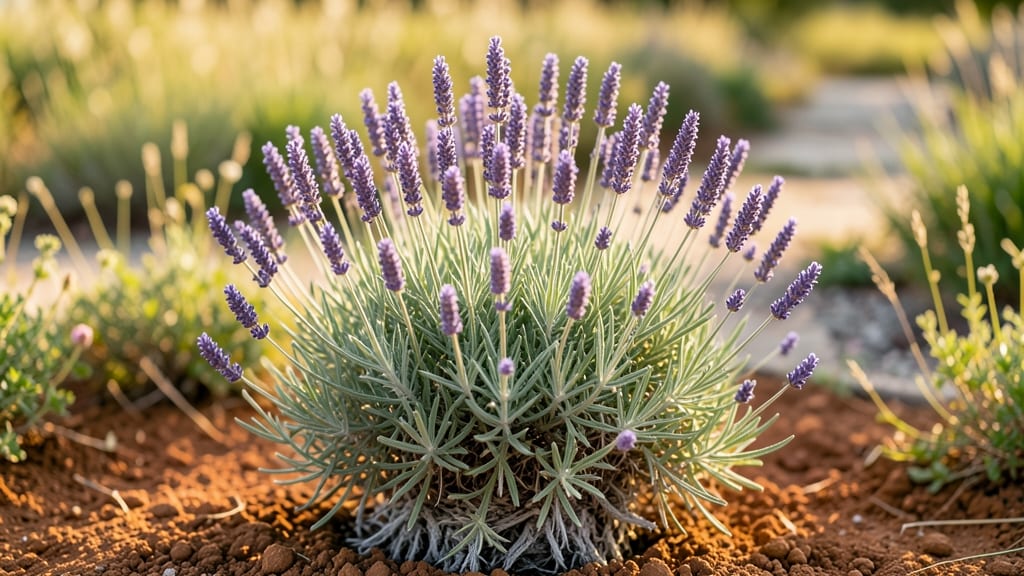
If you're planning a lavender garden, you might be surprised to learn that how tall does a lavender plant grow can vary dramatically—from delicate 1-foot ground covers to towering 4-foot shrubs.
This flexibility makes lavender a perfect fit for everything from window boxes to privacy hedges, but choosing the right variety starts with understanding their growth habits.
The key difference lies in the species: English lavender stays compact, while Spanish lavender reaches impressive heights. Your climate and soil also play a role—well-drained soil and full sun encourage robust growth, while poor conditions can stunt even the hardiest varieties.
With the right care, you can shape lavender to match your space perfectly.
Whether you're working with 6a zone hardiness or a container garden, pruning in late spring keeps plants tidy and encourages bushier growth. For small spaces, dwarf varieties like 'Hidcote' stay under 18 inches, while taller types like 'Grosso' can reach nearly 4 feet.
The secret? Start with the right variety and maintain it properly.
Ready to transform your garden? I'll walk you through selecting the perfect lavender for your needs and the simple care routines that keep it thriving. Let's get your lavender garden looking its best—no matter how tall you want it to grow.

Lavender plant height by variety: compact vs. tall options
Lavender plants offer a stunning range of heights, from dwarf varieties perfect for window boxes to tall shrubs that create dramatic borders. Understanding these differences helps you choose the perfect lavender for your garden's scale and design.
Whether you're dreaming of a fragrant hedge or a delicate container plant, the right variety ensures your lavender thrives without overcrowding other plants.
Most lavender falls into three height categories: dwarf (under 18 inches), semi-dwarf (18-30 inches), and standard (30+ inches). The variety you select directly impacts your garden's layout, spacing needs, and even maintenance requirements.
For example, a 4-foot lavender hedge requires completely different planning than a 12-inch container plant on your patio.
Here's where things get interesting: English lavender tends to stay compact, while Spanish lavender can reach impressive heights. Even within a single variety, individual plants may vary by 6-12 inches depending on growing conditions.
This variability means measuring your space carefully before planting is essential for achieving that polished, professional look.
| Variety | Mature Height | Spread | Best For | Notes |
|---|---|---|---|---|
| English Lavender ('Hidcote', 'Munstead') | 18-24 inches | 24-36 inches | Borders, containers, hedges | Fragrant, cold-hardy, slow-growing |
| French Lavender ('Grosso') | 24-36 inches | 36-48 inches | Cut flowers, dried arrangements | Long stems, strong fragrance |
| Spanish Lavender ('Papillon', 'Bandera') | 36-48 inches | 48-60 inches | Background plants, hedges | Heat-loving, fast-growing |
| Dwarf Lavender ('Lavandula angustifolia 'Bee') | 10-12 inches | 12-18 inches | Rock gardens, window boxes | Perfect for small spaces |
| Hybrid Lavender ('Provence') | 24-30 inches | 30-40 inches | Mediterranean gardens, borders | Drought-tolerant, versatile |
The English lavender varieties like 'Hidcote' and 'Munstead' are my personal favorites for small gardens because they stay neatly contained while still producing abundant flowers. These 18-24 inch plants create beautiful, fragrant borders that never overwhelm your space.
Their compact growth habit makes them ideal for container gardening too—just ensure your pot has drainage holes to prevent root rot.
If you're planning a lavender hedge, Spanish lavender varieties like 'Bandera' or 'Papillon' are excellent choices, reaching 3-4 feet tall at maturity. These taller varieties create stunning vertical interest and work beautifully as privacy screens. Just
For container gardening, dwarf varieties like 'Lavandula angustifolia 'Bee'' are perfect, topping out at just 10-12 inches. These little powerhouses produce proportionally large flowers relative to their size, making them ideal for balcony gardens and patio planters. The key with container lavender is using a well-draining potting mix and ensuring your container has adequate drainage to prevent soggy roots.
One common mistake I see is assuming all lavender grows to the same height. Spanish lavender can easily reach 4 feet tall, while English lavender typically stays under 2 feet.
This difference means selecting the wrong variety for your space can lead to overcrowding or underwhelming results. Always check the mature height before purchasing, and consider your garden's vertical layers when planning.
Pro tip: If you love the look of tall lavender but have limited space, try pruning young plants to encourage bushier growth. Regular pruning can reduce the mature height by 20-30% while increasing flower production.
Just be sure to prune after flowering to maintain the plant's natural shape and encourage next year's blooms.
🌿
How to control lavender height: pruning and care tips
One of the easiest ways to manage lavender plant height is through regular pruning, but timing and technique make all the difference. Prune your lavender in late spring—just after flowering—to encourage bushier growth without sacrificing next year's blooms.
Avoid cutting into old wood, as lavender struggles to regenerate from mature stems.
For tall lavender varieties like 'Grosso,' aim to trim back one-third of the plant's height annually. This keeps it compact while maintaining its signature fragrance. Use sharp, clean shears to make precise cuts just above a leaf node.
Never prune more than 30% of the plant at once, or you risk stunting its growth.
🚨 Callout-Warning ⚠️
- Pruning in fall or winter—this encourages new growth that won't survive cold snaps.
- Cutting into old, woody stems—lavender rarely recovers from severe pruning.
- Using dull shears—ragged cuts invite disease and slow recovery.
Soil and sunlight also influence height. Lavender thrives in well-draining soil—amend heavy clay with sand or gravel to prevent root rot, which can stunt growth. If your lavender starts stretching toward the light, it’s not getting enough 6+ hours of full sun daily.
Move it to a sunnier spot or supplement with a grow light.
Watering plays a surprising role in height control. Overwatering leads to leggy, weak growth, while consistent drought tolerance strengthens stems. Water deeply but infrequently—once a week in summer is plenty—letting the soil dry completely between waterings.
Mulch around the base with gravel or pine needles to improve drainage and discourage fungal growth.
For container-grown lavender, choose pots with drainage holes and limit watering to every 5-7 days. Root-bound plants grow slower and stay shorter, making containers perfect for dwarf varieties like 'Munstead.' Fertilize sparingly—too much nitrogen promotes foliage over flowers, reducing the plant's height and fragrance.
With the right care, you can shape lavender to fit any space. Whether you want a low border or a tall hedge, consistent pruning and proper growing conditions keep your plants healthy and at your desired height.
Start small, observe how your variety responds, and adjust as needed—your lavender will thank you with vibrant blooms and lush growth.