
Plants
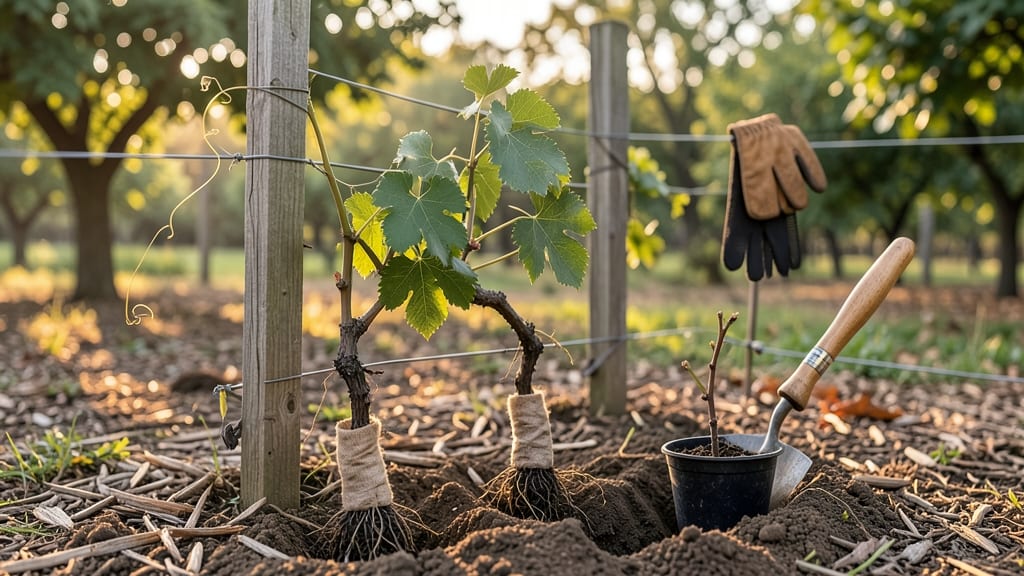
Planting grapes in Kentucky requires timing that balances chill-hour needs with frost risks—get it wrong, and your 🍇 vines could struggle or even fail. The Bluegrass State’s USDA Zone 6a climate means you’ve got a narrow window to plant before spring frosts strike or summer heat sets in.
Most Kentucky gardeners swear by early spring planting (March-April) when soil warms to 50°F, but fall planting (September-October) works too if you choose cold-hardy varieties like Norton. The key? Avoid planting too early—young vines need to establish roots before frost hits around April 15.
I’ll break down the exact planting timeline, soil prep secrets, and frost-proof tricks so your vines thrive from day one. Whether you’re growing table grapes or wine varieties, this guide ensures you pick the perfect moment for Kentucky’s unpredictable weather.
Ready to grow grapes that flourish? Let’s dive into the chill-hour math and frost-free strategies that’ll set you up for a bountiful harvest by August-September.
Kentucky’s chill-hour zones: matching grapes to your location’s winter needs
Kentucky’s USDA Zone 6a climate means your grapevines need 300–1,000 chill hours to break dormancy and fruit properly. If you plant varieties that don’t match your region’s chill hours, you’ll end up with weak growth or no grapes at all.
For example, Northern Kentucky (around 600–800 chill hours) thrives with Norton or Concord, while Southern Kentucky (closer to 1,000+ chill hours) can handle Catawba or Niagara.
Chill hours are calculated by tracking temperatures between 32°F and 45°F during winter. Most Kentucky counties fall into the 600–900 chill-hour range, so avoid Mediterranean varieties like Thompson Seedless—they need less than 400 chill hours and won’t survive our winters.
Instead, opt for native American grapes, which are bred to handle Kentucky’s cold snaps.
Here’s how to check your local chill hours: Use the USDA Plant Hardiness Zone Map or ask your local Cooperative Extension Service. They’ll provide exact chill-hour data for your county.
For instance, Lexington averages 750 chill hours, while Paducah sits at 900+ hours. This data will dictate your grape variety choices.
If you’re unsure, start with Norton grapes—they’re Kentucky’s state grape and handle 500–1,000 chill hours like a champ. They’re also disease-resistant, which is a bonus in Kentucky’s humid summers. For wine grapes, Chancellor (a cold-hardy hybrid) is another great pick with 600–900 chill hours.
🌱 Kentucky Grape Varieties by Chill-Hour Zone
| Variety | Chill Hours | Best For | Notes |
|---|---|---|---|
| Norton | 500–1,000 | Wine, Jelly | Disease-resistant, Kentucky state grape |
| Concord | 600–900 | Juice, Fresh | High yield, needs trellis |
| Catawba | td style="padding: 8px; border: 1px solid #7b5a9b;">800–1,000Wine, Fresh | Deep purple, cold-hardy | |
| Niagara | 600–800 | Fresh, Jelly | Sweet, disease-prone |
| Chancellor | 600–900 | Wine | Hybrid, cold-tolerant |
Once you’ve picked a variety that matches your chill hours, soil prep is critical. Kentucky’s clay-heavy soils need amending with compost or sand to improve drainage.
Grapes hate soggy roots, so test your soil’s drainage rate—if water pools after 6 hours, mix in organic matter like leaf mold or aged manure. Aim for a pH between 6.0 and 7.0; below 5.5 can stunt vine growth.
Pro tip: If you’re planting in Northern Kentucky, where winters are harsher, choose dwarf rootstocks like 1202 Couderc. These keep vines shorter (under 10 feet) and make winter protection easier.
Pair them with a strong trellis system to support the weight of snow and fruit. In Southern Kentucky, where summers are hotter, opt for standard rootstocks like Riparia to handle heat stress.
After planting, mulch heavily with straw or wood chips to insulate roots during Kentucky’s freeze-thaw cycles. This mimics the natural forest floor where grapes originally thrived. In my own garden, I’ve seen Norton vines survive -10°F with proper mulching—something that would kill unprotected vines. Just
Finally, prune in late winter (just before buds swell) to shape your vines for the season. Remove dead wood and thin out crowded canes to improve airflow—this reduces fungal diseases like black rot, which Kentucky’s humidity loves to encourage. With the right chill-hour match and care, your grapes will reward you with sweet, juicy fruit by August-September.
Frost-proof planting timeline: exact months & weather tricks to avoid spring frost damage
Kentucky’s last spring frost typically hits around April 15, but timing your grape planting just right is critical. Planting too early risks frost damage to tender roots, while waiting too long may delay vine establishment.
The ideal window is late March to early April, when soil temperatures reach 50°F and stay consistent.
For fall planting, aim for September to early October—this gives vines time to root before winter dormancy. However, avoid planting after October 15, as new growth may not harden off before the first frost. Always check your local frost-free date using the Kentucky Mesonet for precision.
🌱
⚠️ Frost Alert: Critical Mistakes to Avoid
- Planting too early: Vines may not survive late frosts (common in Zone 6a).
- Ignoring soil temp: Cold soil (below 50°F) stunts root growth.
- Skipping microclimates: South-facing slopes warm faster and reduce frost risk.
Pro Tip: Use row covers or black plastic mulch to protect young vines if frost threatens.
To extend your planting window, choose cold-hardy varieties like Norton or Concord, which tolerate 300–500 chill hours. For extra protection, plant near trellises or fences to create a warmer microclimate. Monitor weather forecasts closely—April showers can bring unexpected frosts even after the average last frost date.
After planting, mulch heavily with straw or wood chips to insulate roots. In early spring, water deeply to encourage root growth before buds break. If a late frost is forecasted, cover vines with frost cloth until temperatures rise. Patience is key—rushing the process often leads to failed vines.
For container grapes, plant in May to avoid root shock from temperature swings. Containers warm faster and are more vulnerable to frost heave. Always use well-draining soil and move pots to a sheltered location at night if frost is predicted.
With these strategies, your vines will establish strong roots before Kentucky’s summer heat peaks.
Remember, the first two years are about root and cane development, not fruit production. Focus on soil health and frost protection—your harvest in August–September will thank you. 🍇