
Plants
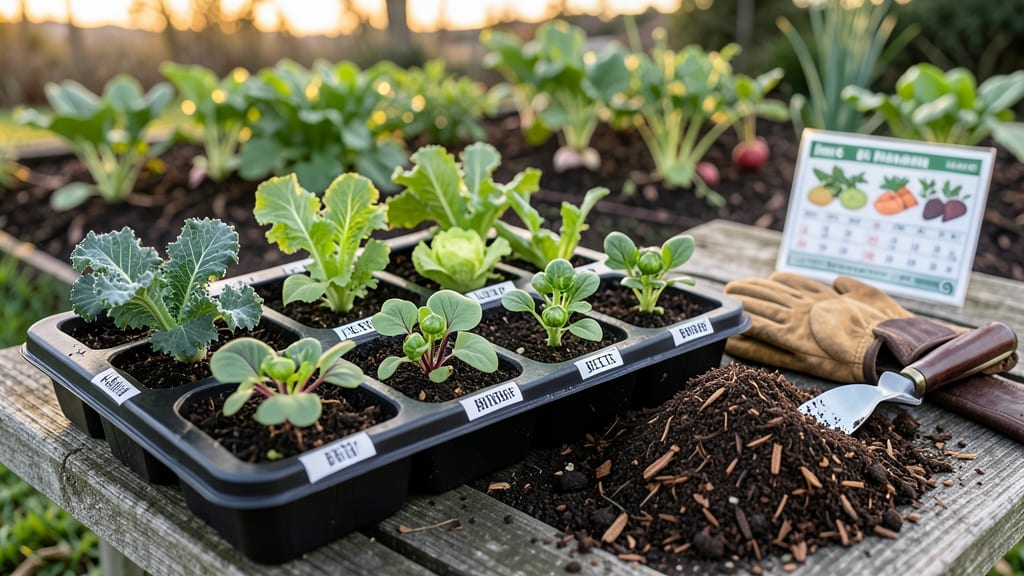
If you’ve ever wondered why your fall garden flops despite your best efforts, the answer likely lies in when to plant fall crops in Zone 6—a timing game that makes all the difference between a bountiful harvest and wasted seeds.
Zone 6 gardeners know the stakes: plant too early, and your greens bolt or rot; too late, and frost steals your harvest before it even ripens.
But here’s the good news—with the right 4-6 week window before frost, you can grow hearty kale, crisp carrots, and sweet radishes that thrive in cooler weather. The key? Understanding your local frost dates and soil temperatures to fine-tune your schedule.
I’ll break down the exact planting timeline for your favorite fall crops, from leafy greens to root vegetables, so you can avoid common mistakes like overcrowding or underestimating microclimates.
By the end, you’ll know precisely when to sow each seed for a garden that delivers reliable harvests all the way into winter.
Ready to transform your fall garden from hit-or-miss to consistently productive? Let’s get those seeds in the ground at the perfect moment—before the first frost even thinks about showing up.
Best fall planting schedule for Zone 6: weeks before frost by crop type
Zone 6 gardeners have a 4-6 week window before the first frost to plant fall crops successfully. The average first frost date in Zone 6 is October 15, but this can vary by 1-2 weeks depending on your microclimate.
To ensure a reliable harvest, calculate your planting dates by counting backward from your local frost date.
Cool-season crops like kale, spinach, and carrots thrive in fall’s cooler temperatures, while warm-season crops like beans and peppers need early starts. Below, I’ve broken down the exact weeks before frost to plant each type, along with maturity timelines to avoid frost damage.
🌱 Pro Tip: Use a soil thermometer to confirm soil temps are 50-70°F—ideal for most fall crops. Warm soil speeds up germination, giving your plants a head start before cooler weather arrives.
| Crop Type | Weeks Before Frost | Maturity Days | Best Varieties for Zone 6 | Notes |
|---|---|---|---|---|
| Cool-Season Greens | 4-6 weeks | 30-50 days | Spinach 'Bloomsdale', Kale 'Winterbor', Lettuce 'Romaine' | Plant in late August for harvest before frost. |
| Root Vegetables | 6-8 weeks | 50-70 days | Carrots 'Danvers', Beets 'Detroit', Radishes 'Cherry Belle' | Start seeds early August for full maturity. |
| Brassicas | 8-10 weeks | 60-80 days | Broccoli 'Waltham', Cabbage 'Golden Acre', Brussels Sprouts | Transplant late July for frost-hardy harvests. |
| Warm-Season Crops | 10-12 weeks | 45-60 days | Bush Beans 'Blue Lake', Peppers 'Bell', Corn 'Silver Queen' | Plant early June to mature before heat fades. |
| Herbs | 4-5 weeks | 30-45 days | Cilantro, Dill, Parsley | Sow late August for fresh harvests before frost. |
For cool-season crops, aim to plant 4-6 weeks before frost. These crops, like spinach and kale, tolerate light frosts and may even sweeten in flavor. Use row covers if temperatures dip below 25°F to extend your harvest.
If you’re growing warm-season crops like peppers or tomatoes, start them 10-12 weeks before frost—typically in early June. These plants need warm soil and long days to mature, so don’t wait too late in the season.
To maximize your fall garden, consider succession planting. Sow fast-growing crops like radishes or lettuce every 2 weeks from mid-August onward. This ensures a continuous harvest until the first hard frost.
One common mistake is planting too late, which leads to stunted growth or crops that never mature. Always check your local frost dates and adjust for your microclimate. Urban areas may stay warmer, while rural spots can frost earlier.
For best results, prepare your soil in early summer by adding compost and aged manure. Well-draining soil with a pH of 6.0-7.0 ensures healthy root development, especially for root vegetables like carrots and beets.
Finally, keep an eye on weather forecasts in September. A sudden cold snap can delay planting, so have your seeds and seedlings ready to go by mid-August. With the right timing, your Zone 6 fall garden can be just as bountiful as your spring one! 🍂
How to adjust planting dates based on your Zone 6 microclimate
Your Zone 6 garden isn’t one-size-fits-all—local microclimates can shift your fall planting window by 1-3 weeks, turning a "too early" into a "perfectly timed" harvest. Factors like elevation, urban heat islands, and nearby water bodies create pockets where frost arrives earlier or later than the average October 15 date.
Ignoring these can mean bolting lettuce or frozen carrots before you even taste them.
For example, gardens in higher-elevation areas (e.g., Appalachian foothills) may experience frost as early as September 20, while urban heat islands in cities like Chicago or Cincinnati might delay frost until November 1. Even a south-facing slope can add 7-10 frost-free days compared to a north-facing yard.
To avoid guesswork, I’ll show you how to use soil thermometers and frost charts to pinpoint your exact planting dates.
🌡️ Soil temperature is your first clue—most fall crops thrive when soil stays between 45°F and 75°F. Use a $15 soil thermometer to check depths of 2-4 inches. If temps drop below 50°F at night, delay planting cool-season crops like spinach or kale until soil warms back up.
Pro tip: Black plastic mulch can raise soil temps by 5-10°F, extending your window by 1-2 weeks.
⚠️ Microclimate Warning
Urban heat islands can delay frost by 2-3 weeks, but low-lying areas may freeze earlier. If your garden sits in a valley or near a lake, plant heat-loving crops (like bush beans) 2 weeks earlier than the average Zone 6 schedule. Conversely, rooftop gardens or south-facing walls can push back frost dates—adjust your timeline accordingly.
Example: A Chicago rooftop might safely plant radishes in early September, while a nearby park could risk frost damage by September 15.
Next, consult your local frost probability chart (available from Almanac.com or NOAA). These maps show the 10-year average frost dates for your ZIP code, accounting for microclimates.
For instance, if your chart shows a 10% frost risk on September 25, that’s your safe planting cutoff for heat-sensitive crops like peppers or eggplants. Pair this with a frost clock app (like Frost Date Finder) to get real-time alerts when temps dip below 32°F.
Don’t overlook wind exposure—gardens in open fields cool faster than sheltered spots. If your yard is windy (e.g., near a hill or open prairie), add 1-2 weeks to your frost buffer.
For example, if the average first frost is October 15, plant bush beans or lettuce by September 15 to ensure they mature before cold snaps. Conversely, windbreaks (like hedges or fences) can delay frost by 3-5 days, giving you extra time for late-season crops.
Finally, test your soil’s cold tolerance by planting a sacrificial crop (like radishes) 2 weeks before your target date. If they survive and thrive, you’ve got a green light for slower-growing crops. If they wilt or bolt, push back your schedule by 10 days.
This DIY method eliminates guesswork and ensures your main harvest crops (like kale or carrots) reach maturity without frost damage.
With these microclimate tweaks, you’ll outsmart frost and grow a fall garden that’s consistently productive, no matter where your Zone 6 plot sits. The key? Observe, adjust, and plant with confidence—your future harvest depends on it. 🌱