
Plants
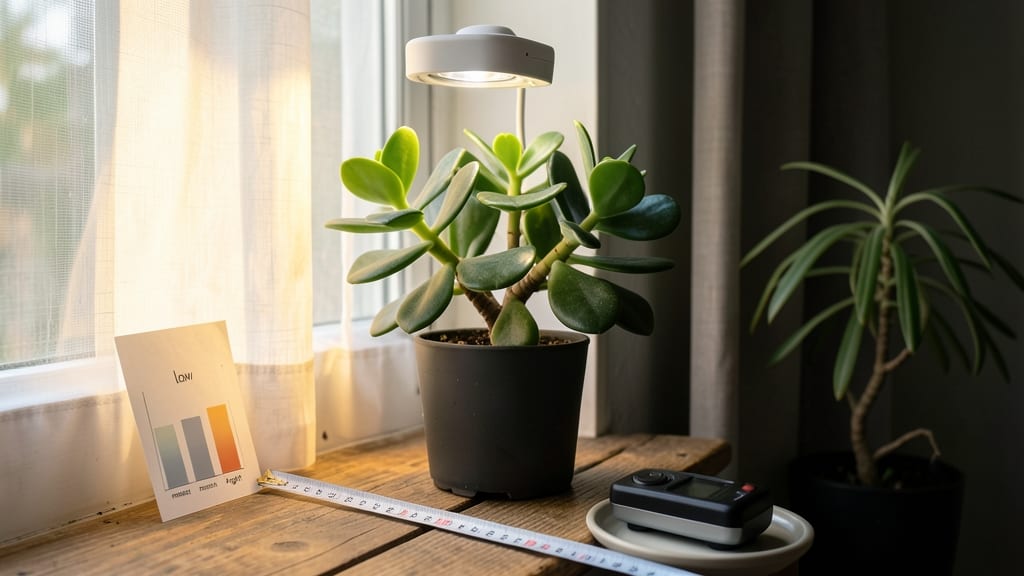
If your Jade Plant 🌿 looks like it’s fighting for its life—stretching toward the light or sporting crispy edges—you might be getting how much light does a jade plant require all wrong.
Jade plants thrive in bright indirect sunlight, but too much direct sun can scorch those plump leaves, while too little leaves them leggy and sad.
I’ve seen firsthand how a simple adjustment—like moving your plant a few feet from a south-facing window or adding a sheer curtain—can transform a struggling Jade Plant into a showstopper.
The key is understanding exactly how much light your plant needs and how to spot when it’s getting too much or too little.
Whether you’re dealing with a sunroom, a dim corner, or a bright kitchen windowsill, I’ll break down the ideal light conditions for your Jade Plant. You’ll learn how to read its leaves for clues, adjust seasonal light shifts, and even use artificial lighting when natural light falls short.
Let’s turn your Jade Plant’s light situation around—so you can enjoy those thick, vibrant leaves all year long without the guesswork.


Optimal light requirements for jade plants: sun exposure breakdown
Jade plants (Crassula ovata) thrive in bright indirect sunlight, making them perfect for sunny windowsills. While they can handle direct sunlight for short periods, too much can scorch their leaves. The ideal balance is 4-6 hours of morning or filtered afternoon sun daily.
Think of their natural habitat—rocky cliffs in South Africa—where they receive intense but scattered sunlight. Mimic this by placing them near a window with sheer curtains to diffuse harsh rays. This prevents sunburn while still providing enough light for photosynthesis.
Here’s the key: bright light without direct midday heat. Jade plants are succulents, so they store water efficiently, but their leaves can turn yellow or develop brown patches if exposed to intense afternoon sun (especially in summer).
| Light Condition | Daily Sunlight Hours | Best Window Placement | Seasonal Adjustments |
|---|---|---|---|
| Bright Indirect Light | 4-6 hours | East or West-facing | Year-round ideal |
| Direct Morning Sun | 2-3 hours | South-facing (early morning) | Spring/Fall only |
| Low Light | <2 hours | North-facing or interior room | Use grow lights |
| Harsh Afternoon Sun | Avoid | Any window without filter | Use sheer curtains |
Seasonal changes affect light intensity. In winter, shorter daylight hours mean your jade plant may need a grow light for 12-14 hours daily to prevent stretching. Rotate the pot weekly so all sides get even light, especially if your home has uneven window light.
Outdoor jade plants love partial shade during summer’s peak heat. If you move yours outside, place it under a dappled shade tree or on a covered patio. This protects them from heat stress while still allowing air circulation.
Pro tip: Watch your jade plant’s leaves. If they’re pale and stretched, it’s begging for more light. If they’re reddish-brown and crispy, it’s getting too much. Adjust gradually—sudden light changes shock these sensitive succulents.
For indoor growers, south-facing windows are best, but only if you use a sheer curtain. East or west windows work perfectly without extra filtering. Avoid north-facing windows unless you supplement with LED grow lights (12-14 hours/day).
Remember, jade plants are low-maintenance powerhouses once you nail their light needs. With the right exposure, they’ll reward you with thick, glossy leaves and even beautiful pink or red blooms in rare cases!
Optimal light requirements for jade plants: sun exposure breakdown
Jade plants (Crassula ovata) thrive in bright indirect sunlight, but they’re surprisingly adaptable. Unlike sun-loving succulents, they can’t handle intense midday rays—especially in hot climates. The key is morning sun with afternoon shade, mimicking their natural habitat in South Africa’s rocky slopes.
Think of it as a goldilocks zone: not too dim, not too harsh.
Indoors, place your jade plant near an east or west-facing window where it gets 4-6 hours of filtered light daily. South-facing windows work too, but use a sheer curtain to diffuse the harsh afternoon sun.
Outdoors, partial shade (like under a tree canopy) is ideal during summer months to prevent sunburned leaves.
| Light Condition | Ideal Hours | Best For | Signs of Stress |
|---|---|---|---|
| Bright Indirect Light | 4-6 hours | Healthy growth | None |
| Direct Morning Sun | 2-3 hours | Outdoor plants | Reddened leaves |
| Low Light | <2 hours | Survival only | Leggy stems |
Seasonal adjustments are crucial. In winter, when sunlight is weaker, move your jade plant closer to the window (within 2 feet). In summer, if leaves start looking pale or translucent, it’s getting too much direct sun.
Rotate the pot quarter-turns weekly to ensure even growth—uneven light causes lopsided plants.
Pro tip: Test your plant’s light exposure with the "shadow test". Place a small object near your jade plant at noon. If the shadow is smaller than the plant, it’s getting too much direct sun.
Adjust placement immediately to avoid leaf scorch—those crispy brown edges are a sure sign of over-exposure.
For low-light situations (like north-facing windows), supplement with a grow light 12 inches away for 6-8 hours daily. LED grow lights with a cool white spectrum are perfect—they mimic natural sunlight without overheating your plant.
Avoid incandescent bulbs, which emit too much heat and can stress the roots.
Remember, jade plants are drought-tolerant but light-sensitive. If you’re unsure about your space’s light levels, start with bright indirect light and monitor for color changes in the leaves. A healthy jade plant should have thick, glossy, dark green leaves—any deviation is a clue to tweak its light conditions.