
Plants
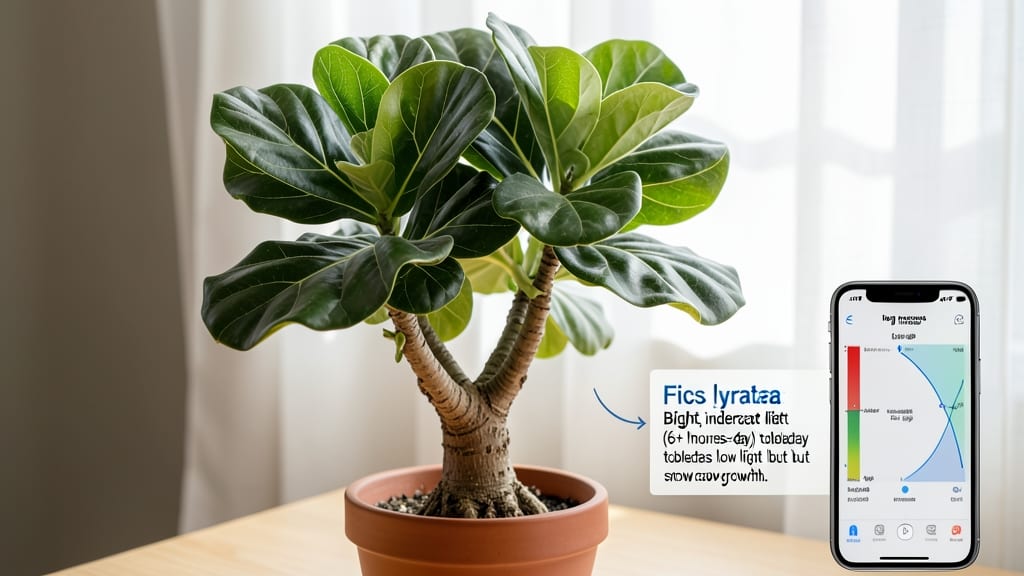
If your 🌿 ficus plant looks more like a sad, droopy stick than a thriving houseplant, chances are its light needs aren't being met—and you're not alone in this struggle.
The key to keeping your ficus lush and vibrant lies in understanding its preference for bright, indirect sunlight, which is often misunderstood by even experienced plant parents.
Too little light, and your ficus will stretch painfully toward the nearest window, its leaves growing sparse and weak. Too much direct sun, and you'll see crispy brown edges or even sunburned patches.
Finding that perfect balance is what separates a struggling plant from one that thrives year-round, whether you're growing it indoors or outdoors in USDA Zone 6a.
In this guide, I'll break down exactly how much light your ficus needs—from ideal window placements to signs of light stress—and share practical tips to adjust your home's lighting for healthier growth.
You'll learn how to spot the difference between bright indirect light and harsh sunlight, and how to supplement with artificial lighting when natural light falls short.
Whether you're dealing with leggy growth, yellowing leaves, or just want to give your ficus the best possible care, these insights will help you create the perfect growing conditions. Let's get your plant back to its vibrant best!


Optimal light conditions for ficus growth: bright indirect sunlight explained
Ficus plants thrive in bright indirect sunlight, making them perfect for indoor spaces with natural light. The key is finding that sweet spot where leaves get enough light to photosynthesize without risking sunburn or leaf scorch.
Too little light leads to leggy growth, while too much causes brown patches or crispy edges. Understanding your ficus's light needs is the first step to keeping it lush and healthy year-round.
For most ficus varieties—like the popular Ficus elastica (rubber plant) or Ficus benjamina (weeping fig)—4 to 6 hours of bright indirect light daily is ideal. This mimics their natural habitat under the dappled shade of tropical forests.
Place your ficus near an east- or north-facing window, where morning sun is gentle and afternoon rays are filtered. South-facing windows can work, but use sheer curtains to diffuse harsh light.
🌿
Seasonal changes affect your ficus's light needs. In summer, when sunlight is intense, move your plant further from the window or use a light filter to prevent leaf burn.
During winter, when natural light is scarce, supplement with a grow light or rotate your ficus to ensure all sides receive equal exposure. A simple trick? Rotate your plant quarter-turns every 2 weeks to promote even growth and prevent lopsided development.
If you notice yellowing leaves, it could signal too much direct light or overwatering in bright conditions. Conversely, dark green leaves with long stems (a condition called etiolation) mean your ficus is reaching for more light.
Adjust its position gradually—never move it abruptly from low to bright light, as this can cause leaf drop due to shock.
For outdoor ficus plants, like the ficus macrophylla (Moreton Bay fig), provide partial shade with morning sun and afternoon shade. These trees can tolerate up to 50% shade, especially in hot climates.
Mulch the root zone to retain moisture and protect roots from temperature fluctuations caused by shifting light conditions.
🪴
Pro tip: Test your ficus's light conditions with a light meter app (like Light Meter for iOS or Lux Light Meter for Android). Aim for 1,000 to 2,000 foot-candles of light—this range mimics the bright indirect light ficus love.
If your space falls short, invest in a full-spectrum LED grow light to bridge the gap between natural and artificial light.
Remember, every home’s light varies. Start by observing your ficus’s leaf color and growth rate—these are the best indicators of whether you’ve nailed the perfect light balance. With the right conditions, your ficus will reward you with glossy leaves, vibrant growth, and years of trouble-free beauty.
How to adjust your home’s light for a healthy ficus plant
Adjusting your home’s lighting for a ficus plant doesn’t have to be complicated—just strategic. The key is replicating its natural habitat of bright indirect sunlight while avoiding harsh rays.
Start by positioning your ficus near an east-facing window, where morning light is gentle but abundant, or a north-facing window for consistent, filtered exposure. If your space lacks natural light, don’t worry—artificial solutions work too!
Sheer curtains are a game-changer for diffusing intense sunlight. Hang them over south- or west-facing windows to mimic the dappled light of a forest floor. Rotate your plant quarter-turns every few weeks to ensure even growth and prevent lopsided development.
This simple habit keeps leaves reaching for balanced light instead of stretching toward one direction.
🌿 For homes with limited windows, grow lights are a lifesaver. LED grow lights with a 5000-6500K color temperature mimic natural daylight and should be placed 12-18 inches above the plant.
Use them for 12-14 hours daily to compensate for low-light conditions. Pair this with a timer for consistency—your ficus will thank you with glossy, healthy leaves!
Natural vs. Artificial Light: Pros and Cons
Natural Light
- Pros: Free, no energy costs
- Cons: Inconsistent, risk of sunburn
Artificial Light
- Pros: Consistent, adjustable intensity
- Cons: Initial cost, requires maintenance
Skylights can also boost light exposure, especially in rooms with high ceilings. Place your ficus 2-3 feet below the skylight to avoid direct rays while maximizing brightness. If you’re using a south-facing window, add a sheer curtain or move your plant 6 feet back to prevent leaf scorch.
Even a simple reflective surface, like a white wall or mirror behind the plant, can bounce extra light onto its leaves.
Seasonal adjustments are crucial. In winter, when daylight is scarce, supplement with a grow light for 8-10 hours daily. During summer, watch for signs of stress like brown leaf tips—this often means too much direct sun.
Move your ficus further from the window or add a sheer curtain to diffuse the intensity. Consistency is key: ficus plants thrive on routine, so stick to your chosen light strategy year-round.
Pro tip: Group your ficus with other low-to-medium light plants, like pothos or snake plants, to create a microclimate that shares light and humidity. This not only improves aesthetics but also helps your ficus adapt more easily to its environment.
With these adjustments, your ficus will grow stronger, greener, and happier—no matter where you place it in your home! ☀️