
Watering
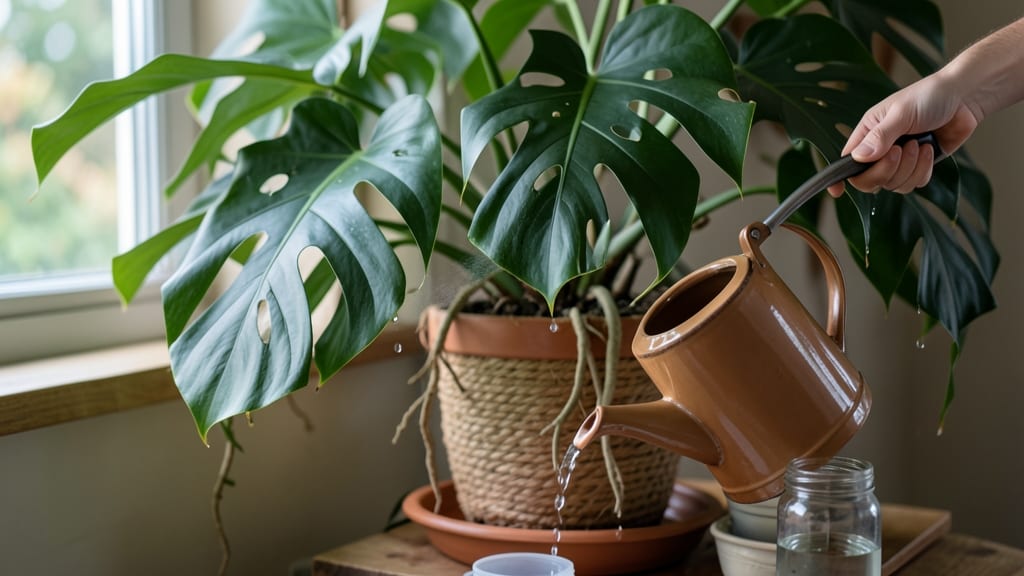
Figuring out how much water a Monstera plant needs can feel like solving a mystery—one wrong move, and your tropical beauty turns into a sad, droopy mess. We’ve all been there: overwatering until the roots drown or letting it get bone-dry until the leaves curl like sad noodles.
The key to keeping your 🌿 Monstera thriving isn’t guesswork—it’s understanding its soil, season, and environment. Whether you’re a beginner or a plant parent who’s lost a few along the way, this guide cuts through the confusion with a science-backed watering schedule that actually works.
You’ll learn the 3-zone soil test method to check moisture without overdoing it, spot the subtle signs of over- or underwatering before it’s too late, and adjust your watering routine for spring’s growth spurt or winter’s slowdown.
No more second-guessing—just lush, happy leaves and a plant that rewards your effort. Let’s get started.

How often to water a Monstera: the 3-Zone soil test method
I’ve learned the hard way that Monsteras don’t like soggy roots—yet they do demand consistent moisture. The key is checking three soil zones before watering: the top 1-2 inches, the mid-layer, and the deeper root zone.
This method prevents both root rot and drought stress, keeping your plant’s leaves glossy and growing strong.
Your Monstera’s water needs change with the seasons, but the 3-zone test works year-round. Stick your finger into the soil: if the top layer feels dry, it’s time to water. But if deeper layers stay damp, hold off—this is where most beginners overdo it.
Think of your Monstera’s roots like a sponge: they need a deep soak, not frequent sips.
Here’s the science: Monsteras thrive in well-draining soil with 60-70% humidity. In their native rainforests, they experience heavy downpours followed by dry spells. Mimic this cycle by watering until water drains from the pot’s bottom, then letting excess water evaporate.
A terracotta pot helps prevent waterlogging, while a self-watering cache pot adds insurance for forgetful gardeners.
🌱
For container-grown Monsteras, I recommend a 500-750ml watering per session—enough to saturate the root ball. If your plant is in a 10-inch pot, this means watering until you see moisture trickling from the drainage holes.
Pro tip: Group your Monsteras together to create a microclimate with higher humidity, reducing how often you need to water.
Light levels dramatically affect water needs. A Monstera in bright indirect light (like an east-facing window) will drink more than one in low-light conditions. In dimmer spots, cut watering by 30%—the plant’s growth slows, so it needs less hydration.
Always pair your watering schedule with a light audit of your plant’s location.
One common mistake? Watering on a strict schedule instead of checking soil moisture. I’ve seen Monsteras suffer from overwatering in winter because owners assumed the same routine applied year-round. Adjust for temperature drops—cooler air means slower evaporation, so your plant holds moisture longer.
Use a moisture meter if you’re unsure; it’s the most accurate tool for this tropical diva.
💧
Finally, let’s talk about water quality. Monsteras hate chlorine and fluoride, which can build up in tap water and damage roots. If your water tastes strong or leaves white residue, opt for filtered or distilled water.
Room-temperature water is ideal—cold water can shock the roots. And here’s a trick: Let tap water sit out for 24 hours before using it to let chemicals dissipate naturally.
Remember: Your Monstera’s leaves are its communication tool. Yellowing edges? Too much salt in the soil. Brown spots? Possible overwatering. Drooping? It’s thirsty. Pay attention, and you’ll master the art of watering this stunning vine in no time.
Let’s troubleshoot those signs next—because even the best gardeners hit bumps in the road.
How often to water a Monstera: the 3-Zone soil test method
Watering your Monstera deliciosa correctly is the secret to those stunning, split leaves you love. Unlike succulents, Monsteras thrive on consistent moisture but hate soggy roots. The key? Testing three soil zones before watering—top layer, mid-section, and root depth—to avoid both overwatering and underwatering.
I’ve learned this method the hard way after losing my first Monstera to root rot!
Start by sticking your finger 1-2 inches deep into the soil. If it feels dry at this level, it’s time to water. But don’t stop there—check deeper. Monsteras store water in their aerial roots, so the mid-layer (2-3 inches down) should also guide your decision.
Pro tip: Use a moisture meter for accuracy, especially if you’re new to this plant.
| Soil Zone | Test Method | Water When |
|---|---|---|
| Top 1-2 inches | Finger test or moisture meter | Dry to touch |
| Mid-layer (2-3 inches) | Finger or chopstick | Slightly moist |
| Root depth (3+ inches) | Gently pull plant (lightweight pots) | Soil clings slightly |
💧 Water thoroughly until liquid runs out drainage holes—never let it sit in saucers.
When watering, aim for a deep soak—about 500-750ml for a 6-inch pot. Let the excess drain completely to prevent root rot, which is the #1 killer of Monsteras. I use a self-watering pot in summer to maintain consistency, but even then, I check the soil zones weekly.
Overwatering causes yellow leaves, while underwatering leads to crispy edges—both are fixable with the right adjustments!
Your Monstera’s pot size and season also matter. Smaller pots dry out faster, so water every 5-7 days in summer. Larger containers or cooler months (fall/winter) may stretch that to 10-14 days.
Always water in the morning to let excess moisture evaporate during the day. This simple routine saved my second Monstera from a sad, droopy fate!
Don’t forget about humidity—Monsteras love it! If your home is dry (like 30% humidity or lower), increase watering slightly and mist the leaves occasionally. A pebble tray under the pot adds extra moisture without overwatering.
I’ve seen Monsteras thrive in 70% humidity with just the right watering balance. Pay attention to your plant’s leaves: glossy and green mean you’re nailing it!
Finally, adjust your schedule based on your Monstera’s growth signals. New leaves unfurling? It’s happy and needs regular watering. Wilting or slow growth? It’s time to tweak your routine.
My Monstera’s largest splits appeared after I switched to this 3-zone method—proof that consistency pays off. Now, let’s talk about what happens when you get it wrong…