
Plants
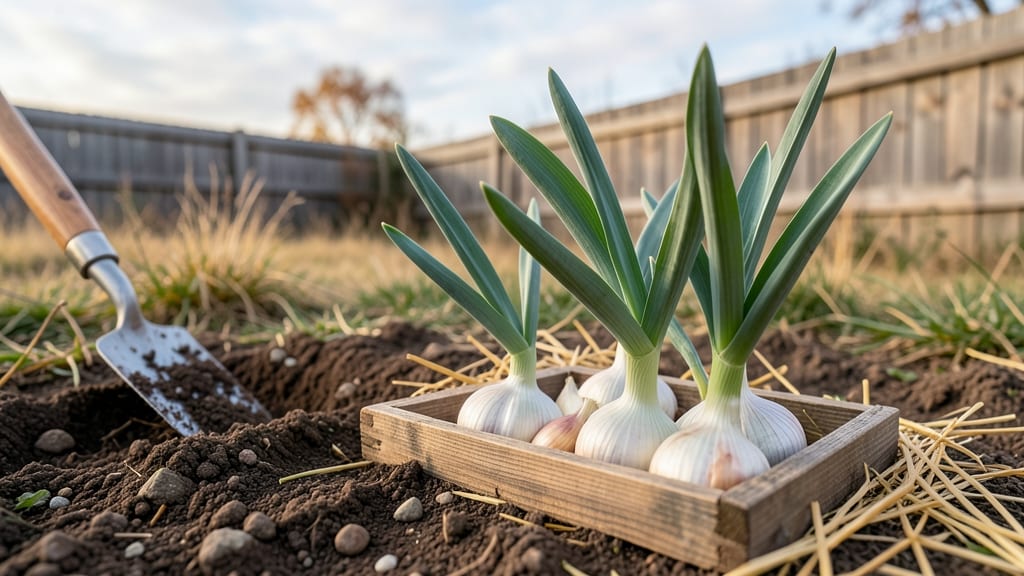
If you’ve ever planted 🧄 garlic in Northeast Ohio only to watch it freeze before winter sets in, you’re not alone—and the solution is simpler than you think.
The key to a bountiful harvest lies in planting at the exact moment when soil temperatures drop but the ground stays workable, typically between mid-October and mid-November.
Unlike spring-planted crops, garlic thrives when exposed to cold, but Northeast Ohio’s Zone 6a climate demands precision. Plant too early, and your cloves might rot; too late, and they won’t root before the ground freezes.
I’ll break down the science-backed window—plus how to adjust for early snow or late frosts—to ensure your garlic bulbs grow big and bold by next summer.
You’ll also discover which garlic varieties handle Ohio’s winters best, how to prep your soil for maximum hardiness, and why mulching with straw (not leaves!) makes all the difference.
Skip the guesswork and follow this timeline, and you’ll be harvesting plump, flavorful garlic by July or early August—no matter what Old Man Winter throws your way.
Ready to turn your garden into a garlic powerhouse? Let’s dive into the steps that’ll have you planting with confidence this fall.
Northeast Ohio garlic planting timeline: exact dates for zero-frost success
Garlic thrives in Northeast Ohio’s Zone 5b/6a climate, but planting too early or late can ruin your harvest. The ideal window is October 15–November 15, when soil temps drop to 40–50°F and frost is imminent.
This timing ensures bulbs establish roots before winter dormancy, while avoiding spring planting—garlic planted in spring rarely matures fully in Ohio’s short season.
Hardneck varieties (like ‘Music’ or ‘German White’) are the top choice for Ohio, as they handle cold better than softnecks. Plant them 4–6 weeks before the ground freezes—typically by November 1 in most of Northeast Ohio.
Softnecks (e.g., ‘Silverskin’) can stretch the window slightly but still need to be in by mid-November.
Soil temperature is your best indicator for timing. Use a soil thermometer to confirm temps are below 50°F at 4" depth. If you plant too early, cloves may sprout and get fried by frost. If you wait too late, they won’t root deeply enough for a strong harvest.
Pro tip: Mid-October is the sweet spot for most of Northeast Ohio (e.g., Cleveland, Akron, Canton). Adjust 1–2 weeks earlier if you’re in higher elevations (like Geauga County) or later for warmer microclimates (e.g., Lorain).
| Stage | Action | Notes |
|---|---|---|
| Soil Prep | Test pH (6.0–7.0), amend with compost | Add aged compost or well-rotted manure 2 weeks before planting |
| Clove Selection | Break apart hardneck bulbs, save largest cloves | Discard small or damaged cloves—they won’t yield well |
| Planting Window | October 15–November 15 | Adjust 1 week earlier for high elevations, 1 week later for warmer areas |
| Planting Depth | 2x clove height (2–3 inches deep) | Pointy end up, roots down—never plant sideways! |
| Spacing | 4–6 inches apart, rows 12 inches apart | Tighter spacing = smaller bulbs; wider spacing = better airflow |
| Mulching | Apply 4–6 inches of straw after planting | Insulates roots in winter and suppresses weeds |
If you miss the October–November window, don’t panic—you can still plant garlic in early December, but bulbs will be smaller.
For a second harvest, try planting a small batch in late February (spring-planted garlic is not recommended for Ohio’s climate, but a few cloves can yield green garlic by summer).
Garlic planted in mid-October will sprout by late November and enter dormancy over winter. The real magic happens in spring, when temps rise above 40°F and bulbs swell. By July, you’ll see scape stalks (hardnecks only)—pinch these off to redirect energy to bulb growth.
For maximum bulb size, aim to harvest when lower leaves turn brown but upper leaves stay green. In Northeast Ohio, this typically falls in late July–early August. Dig carefully with a fork to avoid damaging bulbs—don’t wash them immediately, or they’ll rot.
Remember: Hardneck varieties store poorly but have bold flavor, while softnecks store longer but are milder. Ohio’s climate favors hardnecks—they’re cold-hardy and produce more cloves per bulb. Save seeds from your best bulbs for next year’s free, organic cloves!
How to adjust garlic planting for Northeast Ohio’s unpredictable weather patterns
Northeast Ohio’s weather is famously fickle—one year you’ll get three feet of snow by Halloween, and the next, mild temperatures linger into December.
This unpredictability can turn garlic planting into a gamble, but with the right adjustments, you can outsmart Old Man Winter and still grow bulbs worthy of a chef’s kiss.
The key is flexibility. While the ideal window is October 15–November 15, you’ll need to tweak your approach based on soil temperature, frost forecasts, and even unexpected warm spells.
For example, if your soil stays above 40°F in early November, your garlic may not root properly before freezing. But if a late frost hits in mid-October, you’ll need to act fast to protect your cloves.
Here’s how to adapt your planting strategy for Northeast Ohio’s Zone 5b/6a quirks, including when to mulch, when to plant twice, and which insulation tricks work best. These adjustments will ensure your garlic survives even the most chaotic winters.
⚠️ CRITICAL ADJUSTMENTS FOR NORTHEAST OHIO ⚠️
⚠️ Late Frost Risk (Before October 15)
Problem: If your area typically sees late frosts in early October, planting too soon means your cloves will freeze before rooting.
Solution: Wait until mid-October or use row covers for early plantings. Monitor the National Weather Service’s frost predictions for your county.
Pro Tip: Plant a small test batch in early October and cover it with straw mulch (6+ inches) if frost is forecasted.
If your winter arrives early—say, with snow by November 1—you’ll need to plant as soon as the ground is workable, even if it’s late.
The rule of thumb is to plant 4–6 weeks before the ground freezes, but in Northeast Ohio, that window can shrink to just 2–3 weeks if winter hits fast.
For hardneck varieties (like ‘Music’ or ‘German White’), which are better suited to Ohio’s climate, you can push the envelope slightly later than softnecks. Hardnecks need cold exposure to form bulbs, so planting them up to December 1 (with heavy mulch) can still yield decent results.
Softnecks, however, struggle with late planting and are better suited to the October 15–November 15 window.
One of my favorite tricks for high-risk years is the “plant twice” method. Divide your garlic into two batches: plant the first half in mid-October and the second half in early November.
This way, if one batch fails due to early frost or late snow, you’ve got a backup. It’s extra work, but it’s a foolproof way to guarantee a harvest even in Northeast Ohio’s most unpredictable years.
Finally, mulching is non-negotiable in Ohio’s climate. Straw is your best bet—it insulates without compacting like leaves do, and it regulates soil temperature to prevent freezing and thawing cycles that can damage roots.
Apply 6–8 inches of straw right after planting, and top it off with another 2–3 inches in December if winter arrives early.
With these adjustments, you’ll turn Northeast Ohio’s unpredictable weather into an advantage. Your garlic will root deeply, survive the cold, and reward you with plump, flavorful bulbs by next summer—no matter what winter throws your way. 🌱